Saying “Small” in Spanish: A Comprehensive Guide
Understanding how to express “small” in Spanish is crucial for effective communication. The Spanish language offers several ways to convey the concept of smallness, each with its nuances and appropriate contexts.
This guide provides a comprehensive overview of the vocabulary, grammar, and usage rules related to expressing “small” in Spanish. Whether you’re a beginner or an advanced learner, this article will help you master the different ways to say “small” and use them accurately in various situations, enhancing your overall fluency and comprehension of the Spanish language.
This article will benefit students learning Spanish, travelers who want to describe objects or places, and anyone interested in expanding their vocabulary and grammatical understanding of Spanish. By exploring various words and phrases, we aim to equip you with the tools necessary to express size and scale effectively in Spanish conversations.
Table of Contents
- Definition of “Small” in Spanish
- Structural Breakdown of “Pequeño/a”
- Types and Categories of “Small” in Spanish
- Examples of “Small” in Spanish
- Usage Rules for “Small” in Spanish
- Common Mistakes When Saying “Small” in Spanish
- Practice Exercises
- Advanced Topics
- Frequently Asked Questions (FAQ)
- Conclusion
Definition of “Small” in Spanish
The concept of “small” in Spanish extends beyond a simple translation. It encompasses various words and expressions that convey different nuances of size, quantity, or importance. The primary word for “small” is pequeño/a, but other options like chico/a, diminutives (-ito/a, -illo/a), mínimo/a, and breve offer alternative ways to express smallness depending on the context. Understanding these alternatives is essential for precise and effective communication in Spanish.
Classification: “Small” in Spanish can be classified as an adjective (pequeño/a, chico/a, mínimo/a, breve) or as a component of a diminutive suffix (-ito/a, -illo/a). As an adjective, it describes the size or extent of a noun. As a diminutive suffix, it modifies a noun to indicate smallness, endearment, or insignificance.
Function: The function of “small” in Spanish is to modify nouns, providing information about their size, quantity, or importance. It can also express affection or triviality when used as a diminutive. The choice of word depends on the specific context and the intended meaning.
Contexts: The word used to say “small” in Spanish varies depending on the context. Pequeño/a is a general term for “small” and can be used in most situations. Chico/a is often used to describe the size of people or objects in a more informal way. Diminutives are used to express smallness, endearment, or insignificance. Mínimo/a refers to the smallest possible amount or degree. Breve is used to describe something short in duration or length.
Structural Breakdown of “Pequeño/a”
The word pequeño/a is an adjective that means “small” or “little.” It is structurally simple but must agree in gender and number with the noun it modifies. The masculine form is pequeño, and the feminine form is pequeña. The plural forms are pequeños (masculine) and pequeñas (feminine).
The base form of the adjective is pequeño. The ending changes to reflect the gender and number of the noun it describes. Here’s a breakdown:
- Masculine Singular: pequeño (e.g., un coche pequeño – a small car)
- Feminine Singular: pequeña (e.g., una casa pequeña – a small house)
- Masculine Plural: pequeños (e.g., unos coches pequeños – some small cars)
- Feminine Plural: pequeñas (e.g., unas casas pequeñas – some small houses)
The adjective typically follows the noun it modifies, although it can precede the noun for emphasis or stylistic reasons. When it precedes the noun, it often carries a more subjective or emotional connotation.
Types and Categories of “Small” in Spanish
Spanish offers several ways to express “small,” each with its own nuances and contexts. Here’s a breakdown of the most common options:
Pequeño/a
Pequeño/a is the most common and versatile word for “small” in Spanish. It can be used to describe the size of objects, people, animals, and places. It is a general term that is suitable for most situations.
Examples:
- Un perro pequeño (a small dog)
- Una casa pequeña (a small house)
- Un pueblo pequeño (a small town)
The adjective pequeño/a must agree in gender and number with the noun it modifies, as previously explained.
Chico/a
Chico/a is another word for “small,” but it is often used more informally and can also mean “young” or “little.” It is commonly used to describe people, especially children, and can also be used for objects in a casual context.
Examples:
- Un niño chico (a small boy)
- Una niña chica (a small girl)
- Un coche chico (a small car – informal)
Like pequeño/a, chico/a must agree in gender and number with the noun it modifies.
Diminutives: -ito/a, -illo/a
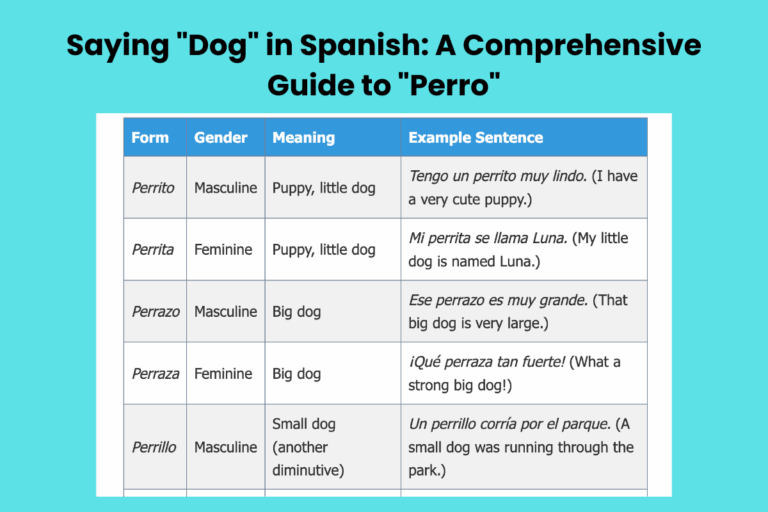
Diminutives are suffixes that are added to nouns to indicate smallness, endearment, or insignificance. The most common diminutive suffixes are -ito/a and -illo/a. These suffixes can transform a regular noun into a smaller, cuter, or less significant version of itself.
Examples:
- Casa (house) → Casita (small house)
- Perro (dog) → Perrito (small dog)
- Libro (book) → Librillo (small book)
The choice between -ito/a and -illo/a can depend on regional preferences or the specific word being modified. Sometimes, the suffix can also change the meaning slightly, adding a sense of affection or triviality.
Mínimo/a
Mínimo/a means “minimum” or “smallest” and is used to describe the smallest possible amount, degree, or extent. It is often used in formal or technical contexts.
Examples:
- La cantidad mínima (the minimum amount)
- El esfuerzo mínimo (the minimum effort)
- La temperatura mínima (the minimum temperature)
Like other adjectives, mínimo/a must agree in gender and number with the noun it modifies.
Breve
Breve means “short” or “brief” and is used to describe something that is short in duration or length. While not directly translating to “small,” it conveys a sense of limited size or extent in terms of time or content.
Examples:
- Una conversación breve (a short conversation)
- Un resumen breve (a brief summary)
- Un viaje breve (a short trip)
Breve also agrees in gender and number, although its usage is more limited to descriptions of time, length, or content rather than physical size.
Examples of “Small” in Spanish
To illustrate the usage of these words, here are several examples categorized by the specific term used:
Examples with Pequeño/a
The following table provides examples of how to use pequeño/a in various contexts. This is the most common way to say “small” in Spanish and is suitable for most situations.
| Spanish | English |
|---|---|
| El niño tiene un coche pequeño. | The boy has a small car. |
| La casa es pequeña pero acogedora. | The house is small but cozy. |
| Compré una televisión pequeña para mi habitación. | I bought a small television for my room. |
| Ellos viven en un pueblo pequeño. | They live in a small town. |
| Ella tiene una mascota pequeña. | She has a small pet. |
| Este restaurante tiene una cocina pequeña. | This restaurant has a small kitchen. |
| Mi abuela tiene manos pequeñas. | My grandmother has small hands. |
| El jardín es pequeño pero hermoso. | The garden is small but beautiful. |
| Necesito una caja pequeña para guardar mis joyas. | I need a small box to store my jewelry. |
| Este zapato es demasiado pequeño para mí. | This shoe is too small for me. |
| El niño tiene un coche pequeño. | The boy has a small car. |
| La casa es pequeña pero acogedora. | The house is small but cozy. |
| Compré una televisión pequeña para mi habitación. | I bought a small television for my room. |
| Ellos viven en un pueblo pequeño. | They live in a small town. |
| Ella tiene una mascota pequeña. | She has a small pet. |
| Este restaurante tiene una cocina pequeña. | This restaurant has a small kitchen. |
| Mi abuela tiene manos pequeñas. | My grandmother has small hands. |
| El jardín es pequeño pero hermoso. | The garden is small but beautiful. |
| Necesito una caja pequeña para guardar mis joyas. | I need a small box to store my jewelry. |
| Este zapato es demasiado pequeño para mí. | This shoe is too small for me. |
| El pastel es pequeño. | The cake is small. |
| La ventana es pequeña. | The window is small. |
| El vaso es pequeño. | The glass is small. |
Examples with Chico/a
The following table demonstrates the usage of chico/a, which is often used informally to describe smallness, especially in relation to people or objects in a casual context.
| Spanish | English |
|---|---|
| El niño es muy chico. | The boy is very small. |
| Ella tiene un coche chico. | She has a small car. |
| Compré un bolso chico para la fiesta. | I bought a small bag for the party. |
| Tenemos un apartamento chico en el centro. | We have a small apartment in the center. |
| Mi hermano es más chico que yo. | My brother is younger than me. |
| Este es un problema chico. | This is a small problem. |
| Ella tiene una casa chica en la playa. | She has a small house on the beach. |
| Necesito un par de zapatos chicos. | I need a pair of small shoes. |
| El perro es chico pero valiente. | The dog is small but brave. |
| El niño es muy chico. | The boy is very small. |
| Ella tiene un coche chico. | She has a small car. |
| Compré un bolso chico para la fiesta. | I bought a small bag for the party. |
| Tenemos un apartamento chico en el centro. | We have a small apartment in the center. |
| Mi hermano es más chico que yo. | My brother is younger than me. |
| Este es un problema chico. | This is a small problem. |
| Ella tiene una casa chica en la playa. | She has a small house on the beach. |
| Necesito un par de zapatos chicos. | I need a pair of small shoes. |
| El perro es chico pero valiente. | The dog is small but brave. |
| Es un pueblo chico. | It’s a small town. |
| La porción es chica. | The portion is small. |
| El gato es chico. | The cat is small. |
Examples with Diminutives
The following table provides examples of diminutives using -ito/a and -illo/a to express smallness, endearment, or insignificance. Diminutives add a layer of affection or triviality to the meaning.
| Spanish | English |
|---|---|
| Tengo una casita en el campo. | I have a small house in the countryside. |
| El perrito es muy juguetón. | The little dog is very playful. |
| Necesito un poquito de azúcar. | I need a little bit of sugar. |
| ¿Puedes darme un momentito? | Can you give me a little moment? |
| El abuelito está durmiendo. | The little grandfather is sleeping. |
| Compré un cochecito para mi hijo. | I bought a small car for my son. |
| Ella tiene una florecita en el pelo. | She has a little flower in her hair. |
| Quiero un cafecito. | I want a little coffee. |
| El gatito está maullando. | The small kitten is meowing. |
| Tengo una casita en el campo. | I have a small house in the countryside. |
| El perrito es muy juguetón. | The little dog is very playful. |
| Necesito un poquito de azúcar. | I need a little bit of sugar. |
| ¿Puedes darme un momentito? | Can you give me a little moment? |
| El abuelito está durmiendo. | The little grandfather is sleeping. |
| Compré un cochecito para mi hijo. | I bought a small car for my son. |
| Ella tiene una florecita en el pelo. | She has a little flower in her hair. |
| Quiero un cafecito. | I want a little coffee. |
| El gatito está maullando. | The small kitten is meowing. |
| Es un arbolito. | It’s a small tree. |
| Tengo un problemita. | I have a small problem. |
| Es una cancioncita. | It’s a small song. |
Examples with Mínimo/a
The following table illustrates the usage of mínimo/a to express the smallest possible amount or degree, often used in formal or technical contexts.
| Spanish | English |
|---|---|
| La cantidad mínima requerida es 10 euros. | The minimum amount required is 10 euros. |
| El esfuerzo mínimo es necesario para aprobar. | The minimum effort is necessary to pass. |
| La temperatura mínima fue de 5 grados. | The minimum temperature was 5 degrees. |
| El riesgo mínimo es aceptable. | The minimum risk is acceptable. |
| Necesitamos un espacio mínimo para construir. | We need a minimum space to build. |
| El salario mínimo es muy bajo. | The minimum salary is very low. |
| La velocidad mínima es de 30 km/h. | The minimum speed is 30 km/h. |
| El impacto mínimo es nuestro objetivo. | The minimum impact is our goal. |
| Se requiere una inversión mínima. | A minimum investment is required. |
| La dosis mínima es suficiente. | The minimum dose is sufficient. |
| La cantidad mínima requerida es 10 euros. | The minimum amount required is 10 euros. |
| El esfuerzo mínimo es necesario para aprobar. | The minimum effort is necessary to pass. |
| La temperatura mínima fue de 5 grados. | The minimum temperature was 5 degrees. |
| El riesgo mínimo es aceptable. | The minimum risk is acceptable. |
| Necesitamos un espacio mínimo para construir. | We need a minimum space to build. |
| El salario mínimo es muy bajo. | The minimum salary is very low. |
| La velocidad mínima es de 30 km/h. | The minimum speed is 30 km/h. |
| El impacto mínimo es nuestro objetivo. | The minimum impact is our goal. |
| Se requiere una inversión mínima. | A minimum investment is required. |
| La dosis mínima es suficiente. | The minimum dose is sufficient. |
| Es el riesgo mínimo. | It’s the minimum risk. |
| Requiere esfuerzo mínimo. | It requires minimum effort. |
| Es la cantidad mínima. | It’s the minimum amount. |
Examples with Breve
The following table showcases the usage of breve to describe something short in duration or length. This word is not a direct translation of “small,” but it can convey a sense of limited size or extent in terms of time or content.
| Spanish | English |
|---|---|
| La reunión fue breve. | The meeting was short. |
| Necesito una explicación breve. | I need a brief explanation. |
| El viaje fue breve pero interesante. | The trip was short but interesting. |
| Tuvimos una conversación breve. | We had a short conversation. |
| El discurso fue breve y conciso. | The speech was short and concise. |
| Escribí una nota breve. | I wrote a short note. |
| La visita fue breve pero agradable. | The visit was short but pleasant. |
| El descanso fue breve. | The break was short. |
| Leí un resumen breve. | I read a brief summary. |
| Fue un momento breve. | It was a short moment. |
| La reunión fue breve. | The meeting was short. |
| Necesito una explicación breve. | I need a brief explanation. |
| El viaje fue breve pero interesante. | The trip was short but interesting. |
| Tuvimos una conversación breve. | We had a short conversation. |
| El discurso fue breve y conciso. | The speech was short and concise. |
| Escribí una nota breve. | I wrote a short note. |
| La visita fue breve pero agradable. | The visit was short but pleasant. |
| El descanso fue breve. | The break was short. |
| Leí un resumen breve. | I read a brief summary. |
| Fue un momento breve. | It was a short moment. |
| Es una pausa breve. | It’s a short break. |
| Es un mensaje breve. | It’s a short message. |
| Es una película breve. | It’s a short film. |
Usage Rules for “Small” in Spanish
Understanding the usage rules for “small” in Spanish is crucial for accurate and fluent communication. These rules involve agreement with gender and number, adjective placement, and contextual usage of each word.
Agreement with Gender and Number
Adjectives in Spanish must agree in gender and number with the nouns they modify. This means that the ending of the adjective must match the gender (masculine or feminine) and number (singular or plural) of the noun.
For example:
- Un coche pequeño (a small car – masculine singular)
- Una casa pequeña (a small house – feminine singular)
- Unos coches pequeños (some small cars – masculine plural)
- Unas casas pequeñas (some small houses – feminine plural)
The same rule applies to chico/a, mínimo/a, and breve. Diminutives also follow this rule, as the -ito/a or -illo/a suffix must agree with the gender of the noun.
Placement of Adjectives
In Spanish, adjectives typically follow the noun they modify. However, there are exceptions, and the placement can affect the meaning or emphasis of the sentence.
For example:
- Un coche pequeño (a small car – standard placement)
- Un pequeño coche (a small car – emphasis on smallness)
When an adjective precedes the noun, it often carries a more subjective or emotional connotation. It can also indicate that the adjective is an inherent quality of the noun.
Contextual Usage of Each Word
The choice of word for “small” depends on the specific context and the intended meaning. Pequeño/a is a general term that can be used in most situations. Chico/a is often used more informally, especially for people or objects in a casual setting. Diminutives add a sense of endearment or insignificance. Mínimo/a refers to the smallest possible amount or degree. Breve describes something short in duration or length.
Understanding these nuances is essential for choosing the most appropriate word and conveying the intended meaning accurately.
Common Mistakes When Saying “Small” in Spanish
Learners often make mistakes when using “small” in Spanish due to the various options and rules. Here are some common errors and how to correct them:
| Incorrect | Correct | Explanation |
|---|---|---|
| Un casa pequeño | Una casa pequeña | The adjective must agree in gender with the noun (casa is feminine). |
| Los niños es chico | Los niños son chicos | The adjective and verb must agree in number with the subject (niños is plural). |
| Necesito un poco azúcar | Necesito un poquito de azúcar | Use the diminutive to express a small amount of something uncountable. |
| La reunión fue pequeña | La reunión fue breve | Use breve to describe something short in duration. |
| El mínimo esfuerzo | El esfuerzo mínimo | Adjective placement can change the emphasis; in this case, standard placement is preferred. |
| Un problema chico | Un problema pequeño | While “chico” can mean small, “pequeño” is a more general and often preferred term for problems. |
Practice Exercises
Test your understanding of “small” in Spanish with these exercises. Choose the correct word or form to complete each sentence.
Exercise 1: Choose the correct adjective (pequeño/a or chico/a).
| Question | Answer |
|---|---|
| 1. El gato es muy ______. | pequeño |
| 2. Ella tiene un coche ______. | chico |
| 3. La casa es ______ pero cómoda. | pequeña |
| 4. Mi hermano es más ______ que yo. | chico |
| 5. Necesito un bolso ______. | pequeño |
| 6. El niño es ______. | chico |
| 7. Compré una televisión ______. | pequeña |
| 8. Ellos viven en un pueblo ______. | pequeño |
| 9. Ella tiene manos ______. | pequeñas |
| 10. El problema es ______. | pequeño |
Exercise 2: Use the correct diminutive form.
| Question | Answer |
|---|---|
| 1. Quiero un ______ de café. (poco) | poquito |
| 2. Tengo una ______ en el jardín. (casa) | casita |
| 3. El ______ está jugando. (perro) | perrito |
| 4. Necesito un ______ de tiempo. (momento) | momentito |
| 5. El ______ está durmiendo. (abuelo) | abuelito |
| 6. Compré un ______ para mi hijo. (coche) | cochecito |
| 7. Ella tiene una ______ en el pelo. (flor) | florecita |
| 8. Quiero un ______. (cafe) | cafecito |
| 9. El ______ está maullando. (gato) | gatito |
| 10. Es un ______. (árbol) | arbolito |
Exercise 3: Choose the correct word (mínimo/a or breve).
| Question | Answer |
|---|---|
| 1. La cantidad ______ requerida es 5 euros. | mínima |
| 2. La reunión fue ______. | breve |
| 3. El esfuerzo ______ es necesario. | mínimo |
| 4. Necesito una explicación ______. | breve |
| 5. La temperatura ______ es de 10 grados. | mínima |
| 6. Tuvimos una conversación ______. | breve |
| 7. El riesgo ______ es aceptable. | mínimo |
| 8. El viaje fue ______. | breve |
| 9. El salario ______ es bajo. | mínimo |
| 10. El discurso fue ______. | breve |
Advanced Topics
For advanced learners, understanding idiomatic expressions and regional variations can further enhance your fluency and comprehension of “small” in Spanish.
Idiomatic Expressions with “Small”
Spanish includes several idiomatic expressions that use the concept of “small.” These expressions often have figurative meanings that go beyond the literal sense of size. Here are some examples:
- A la pequeña: This means “on a small scale” or “in a small way.” For example, “Estamos empezando a la pequeña” (We are starting small).
- Ser de pocas palabras: This translates to “to be a person of few words,” indicating someone who doesn’t talk much.
- En pequeño: This means “in miniature” or “on a small scale.” For example, “Hicimos una réplica en pequeño del edificio” (We made a small-scale replica of the building).
- No tener ni idea: While not directly related to size, this expression means “to have no idea,” implying a small amount of knowledge.
Understanding these expressions can add depth and nuance to your Spanish conversations.
Regional Variations
The Spanish language has regional variations, and the usage of words for “small” can differ from one country or region to another. While pequeño/a is widely understood, other terms may be more common in certain areas. For example:
- In some Latin American countries, chiquito/a is frequently used as a synonym for pequeño/a, especially in informal contexts.
- The usage of diminutives can vary significantly. In some regions, -ito/a is more common, while in others, -illo/a is preferred.
- Certain regions may have unique idiomatic expressions or slang terms for “small” that are not widely used elsewhere.
Being aware of these regional variations can help you better understand and communicate with speakers from different Spanish-speaking regions.
Frequently Asked Questions (FAQ)
Conclusion
Mastering the different ways to say “small” in Spanish involves understanding the nuances of pequeño/a, chico/a, diminutives, mínimo/a, and breve. Each word has its specific context and usage rules, and choosing the right one can significantly enhance your communication skills.
By practicing the examples and exercises provided in this guide, you can improve your fluency and accuracy in Spanish. Remember to pay attention to gender and number agreement, adjective placement, and the specific meaning of each word.
With consistent effort, you’ll be able to express “small” in Spanish with confidence and precision.