Mastering Subjunctive Mood in Spanish: A Comprehensive Guide
The subjunctive mood in Spanish is vital for expressing doubts, desires, emotions, and possibilities. Unlike the indicative mood, which states facts, the subjunctive deals with hypothetical or subjective situations.
Mastering the subjunctive is crucial for achieving fluency and understanding nuanced communication in Spanish. This guide is designed for intermediate to advanced learners who want to deepen their understanding and use of the subjunctive in various contexts.
By the end of this article, you’ll be able to confidently identify and use the subjunctive in a wide range of situations, enhancing your ability to express complex thoughts and emotions in Spanish.
Table of Contents
- Introduction
- Definition of the Subjunctive Mood
- Structural Breakdown of the Subjunctive
- Present Subjunctive
- Imperfect Subjunctive
- Future Subjunctive (Rare)
- Perfect Subjunctive
- Pluperfect Subjunctive
- Si Clauses (Conditional Sentences)
- Verbs of Influence
- Verbs of Emotion
- Verbs of Doubt
- Impersonal Expressions
- Adjective Clauses
- Examples of Subjunctive Usage
- Usage Rules for the Subjunctive
- Common Mistakes with the Subjunctive
- Practice Exercises
- Advanced Topics: Nuances and Exceptions
- Frequently Asked Questions
- Conclusion
Definition of the Subjunctive Mood
The subjunctive mood (el subjuntivo) is a grammatical mood used to express hypothetical, subjective, or uncertain situations. It contrasts with the indicative mood (el indicativo), which is used to state facts or certainties. The subjunctive is not a tense but a mood that can be expressed in different tenses, such as the present subjunctive, imperfect subjunctive, and perfect subjunctive. Its primary function is to convey a speaker’s attitude or perspective toward an action or state.
The subjunctive is typically found in dependent clauses, often introduced by conjunctions like que (that), para que (so that), a menos que (unless), and antes de que (before). It is used to express a variety of non-factual scenarios, including desires, doubts, recommendations, emotions, and possibilities. Understanding the subjunctive is crucial for expressing nuanced meanings and conveying the speaker’s subjective viewpoint in Spanish.
Structural Breakdown of the Subjunctive
The subjunctive mood is formed through specific conjugations that differ from the indicative mood. The formation generally involves identifying the yo form of the present indicative, dropping the -o ending, and adding subjunctive endings.
The endings vary depending on whether the verb is an -ar, -er, or -ir verb. Irregular verbs in the present indicative often maintain their irregularity in the present subjunctive.
For regular -ar verbs, the subjunctive endings are -e, -es, -e, -emos, -éis, -en. For regular -er and -ir verbs, the subjunctive endings are -a, -as, -a, -amos, -áis, -an.
However, there are many irregular verbs that have unique subjunctive forms that must be memorized. The imperfect subjunctive is formed using the third-person plural of the preterite indicative.
Present Subjunctive
The present subjunctive is used to express present or future subjective situations. It’s commonly used after verbs expressing desires, doubts, emotions, and recommendations.
It is also used in certain adverbial clauses and impersonal expressions.
Formation: Start with the “yo” form of the present indicative, drop the “-o”, and add the subjunctive endings:
- -ar verbs: -e, -es, -e, -emos, -éis, -en
- -er/-ir verbs: -a, -as, -a, -amos, -áis, -an
Example: Hablar (to speak) -> Hable, hables, hable, hablemos, habléis, hablen
Example: Comer (to eat) -> Coma, comas, coma, comamos, comáis, coman
Example: Vivir (to live) -> Viva, vivas, viva, vivamos, viváis, vivan
Imperfect Subjunctive
The imperfect subjunctive is used to express past subjective situations, desires, or hypothetical scenarios. It is often used in “si” clauses and after verbs in the past tense that trigger the subjunctive.
Formation: Start with the third-person plural (ellos/ellas/ustedes) form of the preterite indicative, drop the “-ron”, and add the imperfect subjunctive endings:
- -ra, -ras, -ra, -ramos, -rais, -ran
- -se, -ses, -se, -semos, -seis, -sen (alternate form)
Example: Hablar (to speak) -> Hablaron -> Hablara/Hablase, hablaras/hablases, hablara/hablase, habláramos/hablásemos, hablarais/hablaseis, hablaran/hablasen
Example: Comer (to eat) -> Comieron -> Comiera/Comiese, comieras/comieses, comiera/comiese, comiéramos/comiésemos, comierais/comieseis, comieran/comiesen
Example: Vivir (to live) -> Vivieron -> Viviera/Viviese, vivieras/vivieses, viviera/viviese, viviéramos/viviésemos, vivierais/vivieseis, vivieran/viviesen
Future Subjunctive (Rare)
The future subjunctive is rarely used in modern Spanish. It mainly appears in legal or formal documents.
It expresses future hypothetical actions. It is formed from the third-person plural of the preterite indicative.
Formation: Start with the third-person plural (ellos/ellas/ustedes) form of the preterite indicative, drop the “-ron”, and add the future subjunctive endings:
- -re, -res, -re, -remos, -reis, -ren
Example: Hablar (to speak) -> Hablaron -> Hablare, hablares, hablare, habláremos, hablareis, hablaren
Perfect Subjunctive
The perfect subjunctive (pretérito perfecto de subjuntivo) is used to express actions that have been completed before a point in the present or future. It is formed with the present subjunctive of haber (to have) + past participle.
Formation: Haber (present subjunctive) + past participle
- Haya, hayas, haya, hayamos, hayáis, hayan + past participle
Example: Espero que hayas comido (I hope you have eaten).
Example: Dudo que hayan terminado el trabajo (I doubt they have finished the work).
Pluperfect Subjunctive
The pluperfect subjunctive (pluscuamperfecto de subjuntivo) is used to express actions that had been completed before a point in the past. It is formed with the imperfect subjunctive of haber (to have) + past participle.
Formation: Haber (imperfect subjunctive) + past participle
- Hubiera/Hubiese, hubieras/hubieses, hubiera/hubiese, hubiéramos/hubiésemos, hubierais/hubieseis, hubieran/hubiesen + past participle
Example: Si hubiera sabido, te habría ayudado (If I had known, I would have helped you).
Example: Dudaba que hubieran llegado a tiempo (I doubted they had arrived on time).
Types or Categories of Subjunctive Usage
The subjunctive is triggered in several key situations. These situations generally involve expressing subjectivity, uncertainty, or influence.
The following sections detail these categories with examples.
Si Clauses (Conditional Sentences)
In “si” (if) clauses, the subjunctive mood is used in specific combinations with the indicative and conditional tenses to express hypothetical scenarios. These clauses consist of two parts: the “si” clause (protasis) and the main clause (apodosis).
Type 1: Possible/Probable Conditions
Si + present indicative, future indicative
Example: Si tengo tiempo, iré al cine. (If I have time, I will go to the cinema.)
Type 2: Improbable/Unlikely Conditions
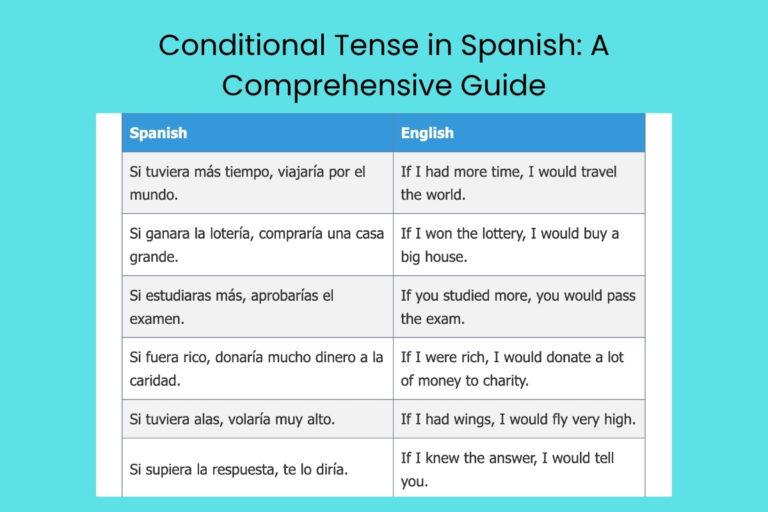
Si + imperfect subjunctive, conditional simple
Example: Si tuviera dinero, viajaría por el mundo. (If I had money, I would travel the world.)
Type 3: Impossible/Contrary-to-Fact Conditions
Si + pluperfect subjunctive, conditional perfect
Example: Si hubiera estudiado, habría aprobado el examen. (If I had studied, I would have passed the exam.)
Verbs of Influence
Verbs of influence (verbs that express a desire, command, request, or suggestion) often trigger the subjunctive in the dependent clause. These verbs indicate that someone is trying to influence another person’s actions.
Common verbs of influence include: querer (to want), desear (to desire), pedir (to ask), insistir (to insist), sugerir (to suggest), recomendar (to recommend), mandar (to order), prohibir (to prohibit), and permitir (to permit).
Example: Quiero que vengas a mi fiesta. (I want you to come to my party.)
Example: Te recomiendo que leas este libro. (I recommend that you read this book.)
Verbs of Emotion
Verbs of emotion (verbs that express feelings such as happiness, sadness, anger, fear, or surprise) trigger the subjunctive in the dependent clause when the subject of the main clause is different from the subject of the dependent clause.
Common verbs of emotion include: alegrarse (to be happy), sentir (to regret), temer (to fear), esperar (to hope), sorprender (to surprise), gustar (to like), molestar (to bother), and enojar (to anger).
Example: Me alegro de que estés aquí. (I’m happy that you are here.)
Example: Siento que estés enfermo. (I regret that you are sick.)
Verbs of Doubt
Verbs of doubt, disbelief, and denial trigger the subjunctive in the dependent clause. These verbs express uncertainty or a lack of conviction.
Common verbs of doubt include: dudar (to doubt), negar (to deny), no creer (not to believe), no pensar (not to think), and no estar seguro (not to be sure).
Example: Dudo que sea verdad. (I doubt that it is true.)
Example: No creo que venga mañana. (I don’t believe he/she is coming tomorrow.)
Impersonal Expressions
Impersonal expressions (expressions that do not refer to a specific person or subject) often trigger the subjunctive. These expressions typically begin with “es” (it is) followed by an adjective or adverb.
Common impersonal expressions include: es importante que (it is important that), es necesario que (it is necessary that), es posible que (it is possible that), es probable que (it is probable that), es mejor que (it is better that), and es urgente que (it is urgent that).
Example: Es importante que estudies. (It is important that you study.)
Example: Es necesario que llegues a tiempo. (It is necessary that you arrive on time.)
Adjective Clauses
Adjective clauses that describe a non-existent or indefinite antecedent trigger the subjunctive. These clauses modify a noun or pronoun that is uncertain or unknown.
Example: Busco un libro que me enseñe español. (I am looking for a book that teaches me Spanish.) (The book is not known.)
Example: No hay nadie aquí que hable francés. (There is no one here who speaks French.) (The person is non-existent.)
Examples of Subjunctive Usage
The following tables provide examples of the subjunctive in different contexts. Each table focuses on a specific type of subjunctive trigger and includes various sentences to illustrate its usage.
Examples with Verbs of Influence
This table illustrates sentences that use verbs of influence like querer, pedir, sugerir, which trigger the subjunctive in the dependent clause. These sentences demonstrate how the subjunctive is used to express desires, requests, and suggestions.
| Sentence | Translation |
|---|---|
| Quiero que me escuches. | I want you to listen to me. |
| Te pido que seas honesto. | I ask you to be honest. |
| Sugiero que vayamos al cine. | I suggest that we go to the cinema. |
| Recomiendo que pruebes este plato. | I recommend that you try this dish. |
| Mi madre insiste en que comamos verduras. | My mother insists that we eat vegetables. |
| El profesor exige que hagamos la tarea. | The teacher demands that we do the homework. |
| Prefiero que no digas nada. | I prefer that you don’t say anything. |
| Aconsejo que llegues temprano. | I advise that you arrive early. |
| Necesito que me ayudes. | I need you to help me. |
| Prohíbo que salgas esta noche. | I forbid you to go out tonight. |
| Permito que uses mi coche. | I allow you to use my car. |
| Deseo que tengas un buen día. | I wish you have a good day. |
| Mando que te calles. | I order you to be quiet. |
| Ruego que me perdones. | I beg you to forgive me. |
| Imploro que me des otra oportunidad. | I implore you to give me another chance. |
| A mí me gustaría que fueras más amable. | I would like you to be more kind. |
| El médico recomienda que descanses. | The doctor recommends that you rest. |
| La empresa requiere que todos lleguen a tiempo. | The company requires everyone to arrive on time. |
| El entrenador sugiere que practiques más. | The coach suggests that you practice more. |
| Quisiera que me llamaras mañana. | I would like you to call me tomorrow. |
| Espero que me puedas ayudar. | I hope you can help me. |
Examples with Verbs of Emotion
This table showcases sentences using verbs of emotion like alegrarse, temer, sentir, which require the subjunctive. These examples illustrate how the subjunctive is employed to express feelings, reactions, and emotional states.
| Sentence | Translation |
|---|---|
| Me alegro de que estés bien. | I’m happy that you are well. |
| Siento que estés triste. | I regret that you are sad. |
| Temo que no lleguemos a tiempo. | I fear that we will not arrive on time. |
| Espero que te guste mi regalo. | I hope you like my gift. |
| Me sorprende que sepas la verdad. | I’m surprised that you know the truth. |
| Me gusta que seas tan amable. | I like that you are so kind. |
| Me molesta que llegues tarde. | It bothers me that you arrive late. |
| Me enoja que me mientas. | It angers me that you lie to me. |
| Me da pena que estés solo. | It makes me sad that you are alone. |
| Me preocupa que no comas. | It worries me that you don’t eat. |
| Me frustra que no me entiendas. | It frustrates me that you don’t understand me. |
| Me encanta que cantes tan bien. | I love that you sing so well. |
| Me asusta que haya tormenta. | It scares me that there is a storm. |
| Me divierte que cuentes chistes. | It amuses me that you tell jokes. |
| Me indigna que haya injusticia. | It outrages me that there is injustice. |
| Me entusiasma que vengas a visitarme. | I’m excited that you come to visit me. |
| Me reconforta que estés aquí. | It comforts me that you are here. |
| Me avergüenza que no sepas la respuesta. | I’m ashamed that you don’t know the answer. |
| Me fastidia que me interrumpas. | It annoys me that you interrupt me. |
| Me complace que hayas venido. | I’m pleased that you have come. |
| Me tranquiliza que todo esté bien. | It reassures me that everything is okay. |
Examples with Verbs of Doubt
This table demonstrates sentences that use verbs of doubt like dudar, no creer, no pensar, which trigger the subjunctive. These examples show how the subjunctive is used to express uncertainty, disbelief, and denial.
| Sentence | Translation |
|---|---|
| Dudo que sea cierto. | I doubt that it is true. |
| No creo que venga mañana. | I don’t believe he/she is coming tomorrow. |
| No pienso que tenga razón. | I don’t think he/she is right. |
| Niego que haya hecho eso. | I deny that I have done that. |
| No estoy seguro de que sea posible. | I’m not sure that it is possible. |
| Es improbable que llueva hoy. | It is unlikely that it will rain today. |
| No es evidente que sea la mejor opción. | It is not evident that it is the best option. |
| Pongo en duda que sea verdad. | I doubt that it is true. |
| Desconfío de que me esté diciendo la verdad. | I distrust that he/she is telling me the truth. |
| No reconozco que haya cometido un error. | I don’t recognize that I have made a mistake. |
| No asumo que lo sepas todo. | I don’t assume that you know everything. |
| No me consta que haya pagado la factura. | I have no proof that he/she has paid the bill. |
| No me parece que sea una buena idea. | I don’t think it’s a good idea. |
| No considero que sea necesario. | I don’t consider it necessary. |
| No opino que sea justo. | I don’t think it’s fair. |
| No veo que haya una solución fácil. | I don’t see that there is an easy solution. |
| Dudo mucho que apruebe el examen. | I highly doubt that he/she will pass the exam. |
| No garantizo que vaya a funcionar. | I don’t guarantee that it will work. |
| No prometo que pueda ayudarte. | I don’t promise that I can help you. |
| No aseguro que esté disponible. | I don’t assure that he/she is available. |
Examples with Impersonal Expressions
This table provides examples of sentences using impersonal expressions like es importante que, es necesario que, es posible que, which trigger the subjunctive. These examples demonstrate how the subjunctive is used in statements that express general opinions or necessities.
| Sentence | Translation |
|---|---|
| Es importante que estudies. | It is important that you study. |
| Es necesario que llegues a tiempo. | It is necessary that you arrive on time. |
| Es posible que llueva mañana. | It is possible that it will rain tomorrow. |
| Es probable que esté ocupado. | It is probable that he/she is busy. |
| Es mejor que te vayas ahora. | It is better that you leave now. |
| Es urgente que me llames. | It is urgent that you call me. |
| Es fundamental que sepas esto. | It is fundamental that you know this. |
| Es esencial que tengas paciencia. | It is essential that you have patience. |
| Es imprescindible que me digas la verdad. | It is essential that you tell me the truth. |
| Es conveniente que hagas ejercicio. | It is convenient that you exercise. |
| Es lógico que estés cansado. | It is logical that you are tired. |
| Es raro que no haya venido. | It is strange that he/she has not come. |
| Es sorprendente que lo sepas. | It is surprising that you know it. |
| Es una lástima que no puedas venir. | It is a pity that you cannot come. |
| Es dudoso que sea verdad. | It is doubtful that it is true. |
| Es inútil que te quejes. | It is useless that you complain. |
| Es preferible que esperes. | It is preferable that you wait. |
| Es aconsejable que consultes a un médico. | It is advisable that you consult a doctor. |
| Es importante que todos participen. | It is important that everyone participates. |
| Es necesario que reserves con anticipación. | It is necessary that you book in advance. |
Usage Rules for the Subjunctive
The subjunctive mood is governed by specific rules that dictate when and how it should be used. These rules depend on the type of clause, the verb in the main clause, and the overall context of the sentence.
Understanding these rules is essential for accurate and effective communication in Spanish.
- Rule 1: Use the subjunctive after verbs of influence, emotion, doubt, and denial, provided that there is a change of subject in the main and dependent clauses.
- Rule 2: Use the subjunctive in impersonal expressions that express opinions, necessities, or possibilities.
- Rule 3: Use the subjunctive in adjective clauses that describe a non-existent or indefinite antecedent.
- Rule 4: Use the subjunctive in certain adverbial clauses, such as those introduced by antes de que (before), para que (so that), a menos que (unless), and en caso de que (in case).
- Rule 5: In “si” clauses, use the imperfect subjunctive to express improbable conditions and the pluperfect subjunctive to express impossible conditions.
Common Mistakes with the Subjunctive
Learners often make mistakes when using the subjunctive due to its complexity and differences from English grammar. Here are some common errors and their corrections.
| Incorrect | Correct | Explanation |
|---|---|---|
| Espero que tienes un buen día. | Espero que tengas un buen día. | “Espero que” triggers the subjunctive, so “tienes” should be “tengas.” |
| Dudo que es verdad. | Dudo que sea verdad. | “Dudo que” triggers the subjunctive, so “es” should be “sea.” |
| Quiero que vas al cine. | Quiero que vayas al cine. | “Quiero que” triggers the subjunctive, so “vas” should be “vayas.” |
| Si tendría dinero, viajaría. | Si tuviera dinero, viajaría. | In “si” clauses, use the imperfect subjunctive (“tuviera”) to express improbable conditions. |
| No creo que él es aquí. | No creo que él esté aquí. | “No creer que” triggers the subjunctive, so “es” should be “esté.” |
| Es importante que lo sabes. | Es importante que lo sepas. | “Es importante que” triggers the subjunctive, so “sabes” should be “sepas.” |
| Me alegro que estás feliz. | Me alegro de que estés feliz. | “Me alegro de que” triggers the subjunctive, so “estás” should be “estés.” |
| Necesito que haces la tarea. | Necesito que hagas la tarea. | “Necesito que” triggers the subjunctive, so “haces” should be “hagas.” |
| Temo que no podemos llegar. | Temo que no podamos llegar. | “Temo que” triggers the subjunctive, so “podemos” should be “podamos.” |
| Sugiero que comes algo. | Sugiero que comas algo. | “Sugiero que” triggers the subjunctive, so “comes” should be “comas.” |
Practice Exercises
Test your understanding of the subjunctive with these exercises. Fill in the blanks with the correct subjunctive form of the verb in parentheses.
Exercise 1: Present Subjunctive
Complete the following sentences with the present subjunctive form of the verb in parentheses.
| Question | Answer |
|---|---|
| 1. Quiero que tú ________ (venir) a mi fiesta. | vengas |
| 2. Es importante que nosotros ________ (estudiar) para el examen. | estudiemos |
| 3. Dudo que ellos ________ (saber) la respuesta. | sepan |
| 4. No creo que ella ________ (tener) tiempo para ayudar. | tenga |
| 5. Me alegro de que tú ________ (estar) aquí. | estés |
| 6. Es necesario que ustedes ________ (hacer) la tarea. | hagan |
| 7. Ojalá que ________ (llover) mañana. | llueva |
| 8. Prefiero que no ________ (decir) nada. | digas |
| 9. Mi madre insiste en que yo ________ (comer) verduras. | coma |
| 10. El profesor exige que nosotros ________ (escribir) un ensayo. | escribamos |
Exercise 2: Imperfect Subjunctive
Complete the following sentences with the imperfect subjunctive form of the verb in parentheses.
| Question | Answer |
|---|---|
| 1. Si yo ________ (tener) dinero, viajaría por el mundo. | tuviera/tuviese |
| 2. Quería que tú ________ (venir) a mi casa. | vinieras/vinieses |
| 3. Era importante que nosotros ________ (estudiar) más. | estudiáramos/estudiásemos |
| 4. Dudaba que ellos ________ (saber) la verdad. | supieran/supiesen |
| 5. No creía que ella ________ (tener) tiempo. | tuviera/tuviese |
| 6. Me alegraba de que tú ________ (estar) allí. | estuvieras/estuvieses |
| 7. Era necesario que ustedes ________ (hacer) un esfuerzo. | hicieran/hiciesen |
| 8. Ojalá que ________ (llover) ayer. | lloviera/lloviese |
| 9. Prefería que no ________ (decir) nada. | dijeras/dijeses |
| 10. Mi madre insistió en que yo ________ (comer) más verduras. | comiera/comiese |
Exercise 3: Perfect Subjunctive
Complete the following sentences with the perfect subjunctive form of the verb in parentheses.
| Question | Answer |
|---|---|
| 1. Dudo que él ________ (llegar) a tiempo. | haya llegado |
| 2. No creo que ellos ________ (terminar) el trabajo. | hayan terminado |
| 3. Me alegro de que tú ________ (aprobar) el examen. | hayas aprobado |
| 4. Es posible que nosotros ________ (perder) las llaves. | hayamos perdido |
| 5. Siento que tú ________ (estar) enfermo. | hayas estado |
| 6. No estoy seguro de que ella ________ (ver) la película. | haya visto |
| 7. Es importante que ustedes ________ (hacer) la tarea. | hayan hecho |
| 8. Quiero que tú ________ (escribir) una carta. | hayas escrito |
| 9. Dudo que nosotros ________ (comer) toda la comida. | hayamos comido |
| 10. No creo que ellos ________ (vivir) aquí antes. | hayan vivido |
Exercise 4: Pluperfect Subjunctive
Complete the following sentences with the pluperfect subjunctive form of the verb in parentheses.
| Question | Answer |
|---|---|
| 1. Si yo ________ (saber) la verdad, te lo habría dicho. | hubiera/hubiese sabido |
| 2. No creía que ellos ________ (llegar) tan tarde. | hubieran/hubiesen llegado |
| 3. Me habría gustado que tú ________ (estar) allí. | hubieras/hubieses estado |
| 4. Era importante que nosotros ________ (estudiar) más para el examen. | hubiéramos/hubiésemos estudiado |
| 5. Dudaba que ella ________ (ver) la película antes. | hubiera/hubiese visto |
| 6. No estaba seguro de que ellos ________ (terminar) el proyecto. | hubieran/hubiesen terminado |
| 7. Me sorprendió que tú no ________ (venir) a la fiesta. | hubieras/hubieses venido |
| 8. Si nosotros ________ (saber) la respuesta, te habríamos ayudado. | hubiéramos/hubiésemos sabido |
| 9. Era preferible que ustedes ________ (hacer) la reserva antes. | hubieran/hubiesen hecho |
| 10. No pensaba que él ________ (decir) la verdad. | hubiera/hubiese dicho |
Advanced Topics: Nuances and Exceptions
While the basic rules of the subjunctive are relatively straightforward, there are several nuances and exceptions that advanced learners should be aware of. These include subtle differences in meaning based on tense usage, regional variations, and idiomatic expressions that require the subjunctive even when the standard rules might not seem to apply.
- Subjunctive in Adverbial Clauses: While certain conjunctions like antes de que always trigger the subjunctive, others, such as cuando (when), require the subjunctive only when referring to a future or hypothetical event.
- Subjunctive with “Quizás” and “Tal vez”: These adverbs, meaning “maybe” or “perhaps,” often trigger the subjunctive, but their usage can vary depending on the degree of uncertainty the speaker wishes to convey.
- Regional Variations: In some regions, the subjunctive may be used more or less frequently in certain contexts. Being aware of these variations can help you better understand and communicate with speakers from different Spanish-speaking countries.
Frequently Asked Questions
Conclusion
Mastering the subjunctive mood is an essential step for intermediate and advanced Spanish learners. While it may seem daunting at first, understanding the rules, practicing regularly, and exposing yourself to authentic Spanish content will greatly improve your ability to use the subjunctive correctly and confidently.
By mastering the subjunctive, you’ll be able to express a wider range of emotions, opinions, and hypothetical scenarios, enhancing your overall fluency and communication skills in Spanish.