Gustar: Mastering Spanish Verbs of Liking with Ease
Understanding how to use the Spanish verb gustar (to like) and similar verbs is crucial for expressing preferences and interests. Unlike English, where the subject is the one doing the liking, in Spanish, the thing that is liked acts upon the person. This can be a tricky concept for English speakers, but mastering it opens the door to more natural and nuanced communication in Spanish. This article will provide a comprehensive guide to gustar and similar verbs, explaining their structure, usage, and common pitfalls. It’s perfect for beginner to intermediate Spanish learners who want to confidently express what they like and dislike.
Table of Contents
- Definition of Gustar
- Structural Breakdown
- Verbs Similar to Gustar
- Examples
- Usage Rules
- Common Mistakes
- Practice Exercises
- Advanced Topics
- FAQ
- Conclusion
Definition of Gustar
The verb gustar in Spanish translates to “to like” in English. However, its grammatical structure is quite different. Instead of the subject performing the action of liking, the thing that is liked performs an action that pleases the person. Think of it as “something is pleasing to someone.” This is why the sentence structure is different from what English speakers are accustomed to. Understanding this reversed relationship is key to mastering gustar and similar verbs. It is classified as a psychological verb or a reflexive-like verb because it expresses a state of feeling or emotion that affects the subject.
The primary function of gustar is to express preferences or enjoyment. It’s used in various contexts, from talking about hobbies and food to expressing interest in people or activities. For example, you might use gustar to say you like pizza, enjoy reading, or are interested in a particular person. This verb is fundamental in everyday conversations and allows you to share your personal tastes and connect with others. The key is to remember that the person experiencing the liking is represented by an indirect object pronoun, not the subject of the sentence.
Structural Breakdown
The structure of sentences using gustar can be broken down into three key components: the indirect object pronoun, the verb gustar (conjugated), and the subject (the thing that is liked). Let’s examine each of these in detail to fully understand how they interact to form grammatically correct sentences.
Indirect Object Pronouns
Indirect object pronouns indicate to whom or for whom the action of the verb is done. With gustar, they represent the person who is doing the liking. The indirect object pronouns are: me (to/for me), te (to/for you, informal), le (to/for him/her/you, formal), nos (to/for us), os (to/for you, plural informal), and les (to/for them/you, plural formal). These pronouns are essential for constructing sentences with gustar. They always precede the verb.
For example, in the sentence “Me gusta el chocolate,” me is the indirect object pronoun indicating that the chocolate is pleasing to me. Without this pronoun, the sentence would be incomplete and grammatically incorrect. The indirect object pronoun clarifies *who* is experiencing the liking. You will often see these pronouns paired with prepositional phrases for emphasis or clarification, such as “A mí me gusta el chocolate” (To me, I like chocolate).
Verb Conjugation
The verb gustar is primarily conjugated in two forms: gusta (singular) and gustan (plural). The conjugation depends on the *subject* of the sentence, which is the thing that is liked. If the thing that is liked is singular, use gusta. If the things that are liked are plural, use gustan. It’s crucial to remember this agreement to avoid grammatical errors.
For instance, “Me gusta el libro” (I like the book) uses gusta because “el libro” (the book) is singular. Conversely, “Me gustan los libros” (I like the books) uses gustan because “los libros” (the books) are plural. The verb form must match the number of the subject, regardless of who is doing the liking. This is a common point of confusion for English speakers, so pay close attention to subject-verb agreement.
Subject Agreement
Subject agreement in sentences with gustar is unique. The subject is not the person experiencing the liking but rather the thing being liked. As mentioned before, if the subject is singular, use gusta; if the subject is plural, use gustan. This agreement can be especially tricky when the subject is an infinitive verb or a clause. In these cases, you almost always use gusta because the infinitive or clause is treated as a singular concept.
Consider the sentences “Me gusta bailar” (I like to dance) and “Me gusta que cantes” (I like that you sing). In both cases, gusta is used because “bailar” (to dance) and “que cantes” (that you sing) are treated as singular subjects. Even though “que cantes” involves another person (you), the entire clause functions as a single entity that is pleasing. Remembering this rule will help you construct accurate and natural-sounding sentences with gustar.
Verbs Similar to Gustar
Several other Spanish verbs function similarly to gustar, expressing how something affects a person. These verbs often involve emotional or physical reactions, and they share the same sentence structure, using indirect object pronouns to indicate the person being affected. Understanding these verbs will significantly expand your ability to express a wide range of feelings and experiences in Spanish. Let’s explore some of the most common verbs in this category.
Encantar (to love)
Encantar is similar to gustar but expresses a stronger feeling – “to love” or “to be enchanted by.” The structure is the same: indirect object pronoun + encanta/encantan + subject. The conjugation of encantar depends on whether the thing being loved is singular or plural.
For example, “Me encanta la música” (I love music) and “Me encantan los conciertos” (I love concerts). Just like with gustar, the indirect object pronoun me indicates who is experiencing the love, and the verb form agrees with the subject (la música or los conciertos).
Interesar (to interest)
Interesar means “to interest.” It follows the same structure as gustar and encantar. The indirect object pronoun indicates who is interested, and the verb form (interesa/interesan) agrees with the subject (what is interesting).
For example, “Me interesa la historia” (I am interested in history) and “Me interesan las lenguas extranjeras” (I am interested in foreign languages). Again, the indirect object pronoun clarifies who is experiencing the interest, and the verb form matches the number of the subject.
Importar (to matter)
Importar means “to matter” or “to be important.” It also follows the same structure as gustar. The indirect object pronoun indicates to whom something matters, and the verb form (importa/importan) agrees with the subject (what matters).
For example, “No me importa el dinero” (Money doesn’t matter to me) and “Me importan mis amigos” (My friends matter to me). Note the use of “no” before the indirect object pronoun to express a negative sentiment. This is a common construction with importar.
Doler (to hurt)
Doler means “to hurt” or “to ache.” This verb is commonly used to talk about physical pain. The structure remains consistent: indirect object pronoun + duele/duelen + subject. The verb form agrees with the part of the body that hurts.
For example, “Me duele la cabeza” (My head hurts) and “Me duelen los pies” (My feet hurt). The indirect object pronoun indicates who is experiencing the pain, and the verb form agrees with the body part that is hurting.
Examples
To solidify your understanding of gustar and similar verbs, let’s look at a series of examples. These examples are categorized by verb to provide a clear and comprehensive illustration of how each verb is used in different contexts.
Examples with Gustar
The following table provides a variety of sentences using gustar. Notice how the indirect object pronouns and verb conjugations change depending on the person and the subject.
| Sentence | Translation |
|---|---|
| Me gusta el café. | I like coffee. |
| Te gusta el té. | You (informal) like tea. |
| Le gusta el vino. | He/She/You (formal) likes wine. |
| Nos gusta la pizza. | We like pizza. |
| Os gusta la pasta. | You (plural informal) like pasta. |
| Les gusta el helado. | They/You (plural formal) like ice cream. |
| Me gustan los gatos. | I like cats. |
| Te gustan los perros. | You (informal) like dogs. |
| Le gustan los libros. | He/She/You (formal) likes books. |
| Nos gustan las películas. | We like movies. |
| Os gustan las canciones. | You (plural informal) like songs. |
| Les gustan los deportes. | They/You (plural formal) like sports. |
| Me gusta bailar. | I like to dance. |
| Te gusta cantar. | You (informal) like to sing. |
| Le gusta leer. | He/She/You (formal) likes to read. |
| Nos gusta viajar. | We like to travel. |
| Os gusta nadar. | You (plural informal) like to swim. |
| Les gusta cocinar. | They/You (plural formal) like to cook. |
| A mí me gusta el fútbol. | I like soccer. (emphasized) |
| A ti te gusta el baloncesto. | You (informal) like basketball. (emphasized) |
Examples with Encantar
The table below showcases the use of encantar in various sentences. Notice the stronger emotion conveyed compared to gustar.
| Sentence | Translation |
|---|---|
| Me encanta este libro. | I love this book. |
| Te encanta la playa. | You (informal) love the beach. |
| Le encanta la música clásica. | He/She/You (formal) loves classical music. |
| Nos encantan las vacaciones. | We love vacations. |
| Os encantan los animales. | You (plural informal) love animals. |
| Les encantan las fiestas. | They/You (plural formal) love parties. |
| Me encanta dormir. | I love to sleep. |
| Te encanta reír. | You (informal) love to laugh. |
| Le encanta sorprender. | He/She/You (formal) loves to surprise. |
| Nos encanta explorar. | We love to explore. |
| Os encanta aprender. | You (plural informal) love to learn. |
| Les encanta enseñar. | They/You (plural formal) love to teach. |
| Me encantan las flores. | I love flowers. |
| Te encantan las estrellas. | You (informal) love stars. |
| Le encantan los paisajes. | He/She/You (formal) loves landscapes. |
| Nos encantan los abrazos. | We love hugs. |
| Os encantan los regalos. | You (plural informal) love gifts. |
| Les encantan los chistes. | They/You (plural formal) love jokes. |
| A mí me encanta el verano. | I love summer. (emphasized) |
| A ti te encanta el invierno. | You (informal) love winter. (emphasized) |
Examples with Interesar
The following table provides examples of sentences using interesar. These illustrate how to express interest in different subjects or activities.
| Sentence | Translation |
|---|---|
| Me interesa la ciencia. | I am interested in science. |
| Te interesa la política. | You (informal) are interested in politics. |
| Le interesa la economía. | He/She/You (formal) is interested in economics. |
| Nos interesan los idiomas. | We are interested in languages. |
| Os interesan las matemáticas. | You (plural informal) are interested in mathematics. |
| Les interesan las artes. | They/You (plural formal) are interested in the arts. |
| Me interesa aprender. | I am interested in learning. |
| Te interesa enseñar. | You (informal) are interested in teaching. |
| Le interesa investigar. | He/She/You (formal) is interested in researching. |
| Nos interesa descubrir. | We are interested in discovering. |
| Os interesa crear. | You (plural informal) are interested in creating. |
| Les interesa innovar. | They/You (plural formal) are interested in innovating. |
| Me interesan los museos. | I am interested in museums. |
| Te interesan los monumentos. | You (informal) are interested in monuments. |
| Le interesan los festivales. | He/She/You (formal) are interested in festivals. |
| Nos interesan los mercados. | We are interested in markets. |
| Os interesan las culturas. | You (plural informal) are interested in cultures. |
| Les interesan las tradiciones. | They/You (plural formal) are interested in traditions. |
| A mí me interesa la música indie. | I’m interested in indie music. (emphasized) |
| A ti te interesa la música rock. | You (informal) are interested in rock music. (emphasized) |
Examples with Importar
The table below provides sentences using importar to express what matters or is important to someone. Note the use of “no” to indicate what doesn’t matter.
| Sentence | Translation |
|---|---|
| Me importa mi familia. | My family matters to me. |
| Te importa tu salud. | Your health matters to you (informal). |
| Le importa su trabajo. | His/Her/Your (formal) work matters to him/her/you. |
| Nos importan nuestros amigos. | Our friends matter to us. |
| Os importan vuestros estudios. | Your (plural informal) studies matter to you. |
| Les importan sus derechos. | Their/Your (plural formal) rights matter to them/you. |
| No me importa el qué dirán. | I don’t care what people say. |
| No te importa el dinero. | You (informal) don’t care about money. |
| No le importa el tiempo. | He/She/You (formal) doesn’t care about time. |
| No nos importa el resultado. | We don’t care about the result. |
| No os importa la opinión. | You (plural informal) don’t care about the opinion. |
| No les importa la fama. | They/You (plural formal) don’t care about fame. |
| Me importa ser feliz. | It matters to me to be happy. |
| Te importa tener éxito. | It matters to you (informal) to be successful. |
| Le importa ayudar a otros. | It matters to him/her/you (formal) to help others. |
| Nos importa proteger el medio ambiente. | It matters to us to protect the environment. |
| Os importa mantener la paz. | It matters to you (plural informal) to maintain peace. |
| Les importa construir un futuro mejor. | It matters to them/you (plural formal) to build a better future. |
| A mí me importa la justicia. | Justice matters to me. (emphasized) |
| A ti no te importa la guerra. | War doesn’t matter to you. (emphasized) |
Examples with Doler
The following table offers examples of how to use doler to describe physical pain. Note how the verb agrees with the body part that hurts.
| Sentence | Translation |
|---|---|
| Me duele la cabeza. | My head hurts. |
| Te duele el estómago. | Your (informal) stomach hurts. |
| Le duele la espalda. | His/Her/Your (formal) back hurts. |
| Nos duelen los pies. | Our feet hurt. |
| Os duelen las manos. | Your (plural informal) hands hurt. |
| Les duelen las rodillas. | Their/Your (plural formal) knees hurt. |
| Me duele el brazo. | My arm hurts. |
| Te duele la garganta. | Your (informal) throat hurts. |
| Le duele el corazón. | His/Her/Your (formal) heart hurts. |
| Nos duelen los ojos. | Our eyes hurt. |
| Os duelen los oídos. | Your (plural informal) ears hurt. |
| Les duelen los dientes. | Their/Your (plural formal) teeth hurt. |
| Me duele respirar. | It hurts me to breathe. |
| Te duele caminar. | It hurts you (informal) to walk. |
| Le duele moverse. | It hurts him/her/you (formal) to move. |
| Nos duele estornudar. | It hurts us to sneeze. |
| Os duele toser. | It hurts you (plural informal) to cough. |
| Les duele tragar. | It hurts them/you (plural formal) to swallow. |
| A mí me duele mucho la pierna. | My leg hurts a lot. (emphasized) |
| A ti te duele poco el dedo. | Your finger hurts a little. (emphasized) |
Usage Rules
While the basic structure of sentences with gustar and similar verbs is relatively straightforward, certain usage rules can help you refine your understanding and avoid common errors. These rules involve clarification pronouns, the use of infinitives, and handling multiple subjects.
Clarification Pronouns
To emphasize or clarify who is experiencing the liking, interest, or pain, you can use a prepositional phrase with a pronoun before the indirect object pronoun. The structure is: a + [pronoun] + indirect object pronoun + verb + subject. The pronouns used in the prepositional phrase are: mí (me), ti (you, informal), él/ella/usted (him/her/you, formal), nosotros/nosotras (us), vosotros/vosotras (you, plural informal), and ellos/ellas/ustedes (them/you, plural formal).
For example, “A mí me gusta el chocolate” (To me, I like chocolate) or “A ella le encanta la música” (To her, she loves music). This construction is particularly useful when you want to contrast preferences or emphasize a specific person’s feelings. While not strictly necessary, it adds clarity and emphasis.
Using Infinitives
When the subject of gustar is an infinitive verb (e.g., to dance, to sing), the verb gustar is almost always conjugated as gusta, regardless of whether there are multiple infinitives. This is because the infinitive or a series of infinitives is treated as a singular concept or activity.
For example, “Me gusta leer y escribir” (I like to read and write) uses gusta even though there are two infinitives. The entire activity of reading and writing is considered a single, unified subject. Similarly, “Le gusta viajar, explorar y aprender” (He/She/You (formal) likes to travel, explore, and learn) also uses gusta. Remembering this rule simplifies sentence construction when using infinitives with gustar.
Multiple Subjects
When there are multiple subjects, you need to determine whether they are singular or plural. If the multiple subjects can be considered as a singular unit or concept, you will use the singular form gusta. If the multiple subjects are clearly individual and distinct, you will use the plural form gustan.
For example, “Me gusta el pan con mantequilla” (I like bread with butter) uses gusta because “pan con mantequilla” is often considered a single item or dish. However, “Me gustan el pan y la mantequilla” (I like bread and butter) uses gustan because the bread and butter are treated as separate items. The distinction often depends on context and intended meaning.
Common Mistakes
One of the most common mistakes English speakers make when using gustar is trying to translate directly from English, leading to incorrect sentence structures. For example, saying “Yo gusto el chocolate” is incorrect. The correct way is “Me gusta el chocolate.” Remembering that the person *receiving* the liking is indicated by the indirect object pronoun, not the subject, is key.
Another frequent error is incorrect verb conjugation. For instance, saying “Me gusta los libros” is wrong. The correct form is “Me gustan los libros” because “los libros” (the books) is plural. The verb must agree with the subject (the thing being liked), not the person doing the liking. Paying close attention to subject-verb agreement is crucial for accuracy.
Finally, forgetting to use the indirect object pronoun is a common mistake. Saying simply “Gusta el café” is incomplete. You need to specify who likes the coffee using the appropriate indirect object pronoun: “Me gusta el café,” “Te gusta el café,” etc. The indirect object pronoun is essential for indicating who is experiencing the liking or interest.
Here’s a table summarizing common mistakes with correct and incorrect examples:
| Mistake | Incorrect | Correct |
|---|---|---|
| Incorrect Subject | Yo gusto el chocolate. | Me gusta el chocolate. |
| Verb Disagreement | Me gusta los libros. | Me gustan los libros. |
| Missing Pronoun | Gusta el café. | Me gusta el café. |
| Using “tener” to express liking | Tengo gusto el helado | Me gusta el helado |
| Confusing “gustar” with “querer” | Quiero la pizza (when expressing liking) | Me gusta la pizza |
Practice Exercises
To reinforce your understanding of gustar and similar verbs, complete the following exercises. These exercises cover various aspects of the grammar, including fill-in-the-blanks, translation, and error correction.
Exercise 1: Fill in the Blanks
Fill in the blanks with the correct form of gustar, encantar, interesar, importar, or doler.
| Question | Answer |
|---|---|
| A mí ____ (gustar) los deportes. | A mí me gustan los deportes. |
| A ti ____ (encantar) la música. | A ti te encanta la música. |
| A él ____ (interesar) la historia. | A él le interesa la historia. |
| A nosotros ____ (importar) el medio ambiente. | A nosotros nos importa el medio ambiente. |
| A vosotros ____ (doler) la cabeza. | A vosotros os duele la cabeza. |
| A ellos ____ (gustar) bailar. | A ellos les gusta bailar. |
| A mí no ____ (importar) el dinero. | A mí no me importa el dinero. |
| A ti ____ (doler) los pies. | A ti te duelen los pies. |
| A ella ____ (encantar) viajar. | A ella le encanta viajar. |
| A nosotros ____ (interesar) aprender idiomas. | A nosotros nos interesa aprender idiomas. |
Exercise 2: Translation
Translate the following sentences into Spanish using gustar or a similar verb.
| English | Spanish |
|---|---|
| I like to read. | Me gusta leer. |
| They love the beach. | Les encanta la playa. |
| He is interested in science. | Le interesa la ciencia. |
| We care about our family. | Nos importa nuestra familia. |
| Your (informal) head hurts. | Te duele la cabeza. |
| I don’t like spicy food. | No me gusta la comida picante. |
| She loves to sing. | Le encanta cantar. |
| We are interested in art. | Nos interesan las artes. |
| Money doesn’t matter to me. | No me importa el dinero. |
| Their feet hurt. | Les duelen los pies. |
Exercise 3: Error Correction
Identify and correct the errors in the following sentences.
| Incorrect | Correct |
|---|---|
| Yo gusto el café. | Me gusta el café. |
| Me gusta los libros. | Me gustan los libros. |
| A ella gusta bailar. | A ella le gusta bailar. |
| Nos encanta la playas. | Nos encantan las playas. |
| Les duele la cabeza. | Les duele la cabeza. (Correct) |
| A mí interesan las ciencias. | A mí me interesan las ciencias. |
| Te importa el dinero? | ¿Te importa el dinero? (Correct, but needs question marks) |
| Nosotros gusta viajar. | A nosotros nos gusta viajar. |
| Os duelen el pie. | Os duele el pie. / Os duelen los pies. |
| A ellos encanta la música. | A ellos les encanta la música. |
Advanced Topics
Once you’ve mastered the basic usage of gustar and similar verbs, you can explore more advanced topics, such as using these verbs in the subjunctive mood and conditional tense. These advanced applications allow for more nuanced and complex expressions of preferences and feelings.
Subjunctive Mood
The subjunctive mood is often used in clauses that express desires, doubts, or hypothetical situations. When using gustar in the subjunctive, you’re typically expressing that you like *something to happen* or that you *want someone to like something*. The subjunctive is commonly triggered by phrases like “es importante que” (it’s important that), “es necesario que” (it’s necessary that), or “quiero que” (I want that).
For example, “Quiero que te guste mi regalo” (I want you to like my gift). Here, the subjunctive “guste” is used because it’s expressing a desire. Similarly, “Es importante que les guste la presentación” (It’s important that they like the presentation) uses the subjunctive because it expresses importance or necessity. Mastering the subjunctive with gustar allows you to convey more complex and subtle meanings.
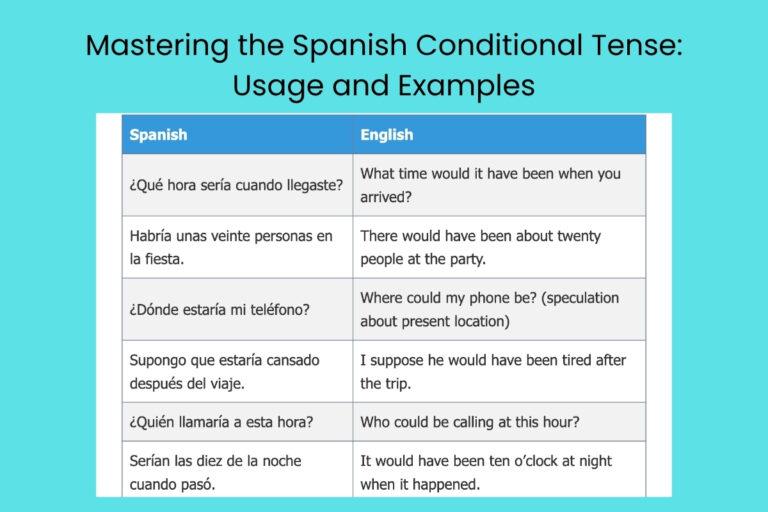
Conditional Tense
The conditional tense is used to express what *would* be liked, or what *would* matter under certain conditions. It adds a layer of hypothetical or conditional meaning to the expression of preferences or feelings. The conditional form of gustar is “gustaría” (singular) and “gustarían” (plural).
For example, “Me gustaría viajar a España” (I would like to travel to Spain) expresses a desire or a polite request. Similarly, “Te gustaría probar este plato?” (Would you like to try this dish?) is a polite offer. The conditional tense is also used to express hypothetical situations: “Nos gustaría ir al concierto si tuviéramos tiempo” (We would like to go to the concert if we had time). Using the conditional tense with gustar enhances your ability to express nuanced desires and hypothetical scenarios.
FAQ
Why is the structure of gustar different from English?
The structure of gustar reflects a different way of conceptualizing the action of “liking.” In Spanish, the thing that is liked performs an action of pleasing the person, rather than the person actively “liking” the thing. This is why the indirect object pronoun represents the person experiencing the liking, and the subject is the thing that is liked.
How do I emphasize who likes something?
You can emphasize who likes something by using a prepositional phrase with a pronoun before the indirect object pronoun: “A mí me gusta el chocolate” (To me, I like chocolate). This construction adds clarity and emphasis.
What if I want to say I don’t like something?
To say you don’t like something, place “no” before the indirect object pronoun: “No me gusta el brócoli” (I don’t like broccoli).
Can I use gustar with people?
Yes, you can use gustar with people, but it implies “to be pleasing to” rather than romantic love. For example, “Le gusto a Juan” means “Juan finds me pleasing” or “Juan likes me” (in a non-romantic sense). For romantic love, use verbs like amar or querer.
Is it ever correct to say “Yo gusto“?
No, it is almost never correct to say “Yo gusto“. The only exception is if you are trying to say “I please” in a very specific and uncommon context. It’s best to avoid this construction and always use the indirect object pronoun with gustar.
How do I use “gustar” to ask someone if they like something?
To ask someone if they like something, use the following structure: “¿Te gusta…?” For example, “¿Te gusta la pizza?” (Do you like pizza?). Remember to use the appropriate indirect object pronoun based on who you are asking.
What’s the difference between “mucho” and “muchos” when used with “gustar”?
“Mucho” is used to modify the verb “gustar” when you want to say you like something a lot in general. For example, “Me gusta mucho bailar” (I like to dance a lot).
“Muchos/muchas” are used to quantify the noun that you like. For example, “Me gustan muchos libros” (I like many books).
Can I use “gustar” in the past tense?
Yes, you can use “gustar” in the past tense to talk about things you used to like or how something was pleasing to you in the past. The preterite and imperfect tenses are commonly used.
For example, “Me gustó la película” (I liked the movie – preterite, implying a specific instance) or “Me gustaba la playa cuando era niño” (I used to like the beach when I was a child – imperfect, implying a habitual action).
Conclusion
Mastering gustar and similar verbs is essential for expressing preferences, interests, and feelings in Spanish. While the structure may initially seem challenging, understanding the relationship between the indirect object pronoun, the verb conjugation, and the subject is key. By practicing regularly and paying attention to common mistakes, you can confidently use these verbs to communicate effectively and naturally in Spanish. Don’t be afraid to experiment with different constructions and contexts to further refine your understanding and fluency. ¡Buena suerte!