Mastering Spanish Grammar: Essential Tips and Tricks
Spanish grammar, while intricate, is a beautiful system that unlocks the richness and expressiveness of the language. Understanding its nuances is crucial for effective communication, whether you’re planning a trip to Spain, connecting with Spanish-speaking friends, or pursuing academic studies.
This article delves into essential Spanish grammar tips and tricks, providing you with a comprehensive guide to navigate its complexities. From mastering verb conjugations to understanding the subjunctive mood, this resource is designed for learners of all levels who aim to achieve fluency and accuracy in Spanish.
This guide is perfect for beginner and advanced Spanish learners, students studying Spanish in school, and anyone looking to improve their Spanish language skills. By focusing on the most important aspects of Spanish grammar and providing practical tips, this article will help you avoid common mistakes and build a solid foundation for confident communication.
Table of Contents
- Introduction
- Understanding Spanish Grammar
- Structural Breakdown of Spanish Grammar
- Key Areas of Spanish Grammar
- Examples of Spanish Grammar in Action
- Important Usage Rules
- Common Mistakes to Avoid
- Practice Exercises
- Advanced Topics in Spanish Grammar
- Frequently Asked Questions
- Conclusion
Understanding Spanish Grammar
Spanish grammar, like any language’s grammar, is the set of rules governing the structure of sentences, words, and phrases. It encompasses everything from how verbs are conjugated to how nouns agree in gender and number with their articles and adjectives.
Mastering Spanish grammar is essential for clear and accurate communication. It allows you to express your thoughts and ideas effectively, and understand the nuances of the language.
Spanish grammar is classified as a Romance language grammar, sharing similarities with Italian, French, and Portuguese. It relies heavily on verb conjugation to indicate tense, mood, and subject.
Noun-adjective agreement is another key feature, where adjectives must match the gender and number of the nouns they modify. Understanding these core principles is crucial for building a solid foundation in Spanish.
The function of Spanish grammar is to provide a framework for constructing meaningful sentences. Without grammar, words would be just a collection of sounds, devoid of structure and meaning.
Grammar provides the rules that allow us to combine words in a way that conveys our intended message. It is the backbone of the language, enabling communication and understanding.
Structural Breakdown of Spanish Grammar
The structure of Spanish grammar can be broken down into several key components. These components work together to create complete and meaningful sentences.
Understanding how each component functions is essential for mastering the language.
At the most basic level, Spanish sentences typically follow a Subject-Verb-Object (SVO) structure, although this can be flexible. The subject is the person or thing performing the action, the verb is the action itself, and the object is the person or thing receiving the action.
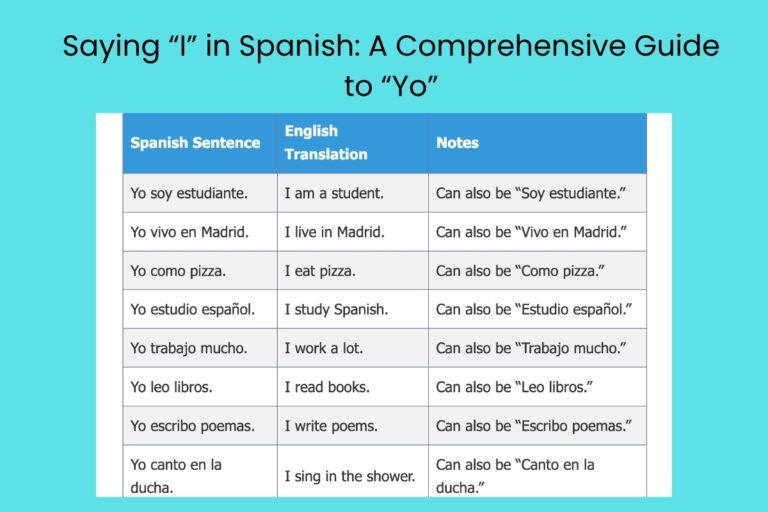
For example, in the sentence “Yo como manzanas” (I eat apples), “Yo” is the subject, “como” is the verb, and “manzanas” is the object.
Nouns in Spanish are either masculine or feminine and have singular and plural forms. Articles (like “el,” “la,” “los,” and “las”) must agree in gender and number with the nouns they modify.
Adjectives also follow this agreement rule, changing their endings to match the gender and number of the nouns they describe.
Verbs are the most complex part of Spanish grammar. They are conjugated to indicate tense (present, past, future), mood (indicative, subjunctive, imperative), and person (I, you, he/she/it, we, you all, they).
Regular verbs follow predictable conjugation patterns, while irregular verbs have unique forms that must be memorized.
Key Areas of Spanish Grammar
Spanish grammar encompasses several key areas, each with its own set of rules and complexities. Mastering these areas is crucial for achieving fluency and accuracy in the language.
Nouns and Articles
Nouns in Spanish are words that represent people, places, things, or ideas. Every noun has a gender (masculine or feminine) and a number (singular or plural).
Articles are words that precede nouns and indicate their gender and number. There are two types of articles: definite (el, la, los, las) and indefinite (un, una, unos, unas).
Definite articles (el, la, los, las) are used to refer to specific nouns. “El” is used for masculine singular nouns, “la” for feminine singular nouns, “los” for masculine plural nouns, and “las” for feminine plural nouns.
Indefinite articles (un, una, unos, unas) are used to refer to non-specific nouns. “Un” is used for masculine singular nouns, “una” for feminine singular nouns, “unos” for masculine plural nouns, and “unas” for feminine plural nouns.
Adjectives
Adjectives are words that describe nouns. In Spanish, adjectives typically follow the nouns they modify and must agree with them in gender and number.
For example, if you are describing a masculine singular noun, the adjective must also be masculine and singular. Similarly, if you are describing a feminine plural noun, the adjective must also be feminine and plural.
There are some adjectives that have the same form for both masculine and feminine nouns, particularly those ending in “-e” or “-ista.” However, most adjectives change their endings to agree with the gender and number of the noun they modify.
Verbs and Conjugation
Verbs are words that express actions, states, or occurrences. Verb conjugation is the process of changing the form of a verb to indicate tense, mood, and person.
Spanish verbs are divided into three categories based on their infinitive endings: -ar, -er, and -ir. Each category has its own set of conjugation rules.
There are several tenses in Spanish, including the present, past (preterite, imperfect), future, conditional, and subjunctive. Each tense has its own set of conjugations for each person (yo, tú, él/ella/usted, nosotros, vosotros, ellos/ellas/ustedes).
Mastering verb conjugation is essential for speaking and writing accurately in Spanish.
Pronouns
Pronouns are words that replace nouns. There are several types of pronouns in Spanish, including personal pronouns (yo, tú, él/ella/usted, nosotros, vosotros, ellos/ellas/ustedes), possessive pronouns (mío, tuyo, suyo, nuestro, vuestro, suyo), demonstrative pronouns (este, ese, aquel), and relative pronouns (que, quien, cual).
Personal pronouns are used to refer to specific people or things. Possessive pronouns indicate ownership.
Demonstrative pronouns point to specific nouns. Relative pronouns connect clauses and refer back to a noun mentioned earlier in the sentence.
Adverbs
Adverbs are words that modify verbs, adjectives, or other adverbs. They provide information about how, when, where, or to what extent something is done.
Many adverbs in Spanish are formed by adding “-mente” to the feminine form of an adjective. For example, “rápida” (fast) becomes “rápidamente” (quickly).
Adverbs can be used to express a variety of meanings, such as manner, time, place, and degree. They are an essential part of Spanish grammar and can add detail and nuance to your writing and speaking.
Prepositions
Prepositions are words that connect nouns or pronouns to other words in a sentence. They indicate the relationship between the noun or pronoun and the other words.
Common prepositions in Spanish include “a,” “de,” “en,” “por,” “para,” “con,” “sin,” “sobre,” and “entre.”
Each preposition has its own specific meaning and usage. Understanding the different prepositions and how to use them correctly is essential for constructing grammatically correct sentences in Spanish.
The Subjunctive Mood
The subjunctive mood is used to express doubt, uncertainty, wishes, emotions, and opinions. It is often used in subordinate clauses that are introduced by conjunctions such as “que,” “si,” “cuando,” “para que,” and “a menos que.”
The subjunctive mood has its own set of verb conjugations, which are different from the indicative mood. Mastering the subjunctive mood is essential for expressing nuanced and complex ideas in Spanish.
Examples of Spanish Grammar in Action
To solidify your understanding of Spanish grammar, let’s look at some examples of how these concepts are used in real sentences.
Nouns and Articles Examples
Here’s a table showcasing the usage of nouns and articles in Spanish, demonstrating gender and number agreement.
| Spanish | English | Notes |
|---|---|---|
| El libro | The book | Masculine singular |
| La mesa | The table | Feminine singular |
| Los libros | The books | Masculine plural |
| Las mesas | The tables | Feminine plural |
| Un carro | A car | Masculine singular |
| Una casa | A house | Feminine singular |
| Unos carros | Some cars | Masculine plural |
| Unas casas | Some houses | Feminine plural |
| El problema | The problem | Masculine singular (irregular ending) |
| La foto | The photo | Feminine singular (shortened form of fotografía) |
| Los días | The days | Masculine plural |
| Las noches | The nights | Feminine plural |
| Un árbol | A tree | Masculine singular |
| Una flor | A flower | Feminine singular |
| Unos estudiantes | Some students | Masculine plural |
| Unas profesoras | Some teachers | Feminine plural |
| El agua | The water | Feminine singular (uses “el” for pronunciation) |
| La sal | The salt | Feminine singular |
| Los mapas | The maps | Masculine plural |
| Las ciudades | The cities | Feminine plural |
| Un examen | An exam | Masculine singular |
| Una lección | A lesson | Feminine singular |
| Unos relojes | Some watches | Masculine plural |
| Unas puertas | Some doors | Feminine plural |
Adjective Examples
This table demonstrates adjective agreement with nouns in Spanish.
| Spanish | English | Notes |
|---|---|---|
| El libro es interessante. | The book is interesting. | Masculine singular |
| La mesa es alta. | The table is tall. | Feminine singular |
| Los libros son interessantes. | The books are interesting. | Masculine plural |
| Las mesas son altas. | The tables are tall. | Feminine plural |
| El carro es rojo. | The car is red. | Masculine singular |
| La casa es grande. | The house is big. | Feminine singular |
| Los carros son rojos. | The cars are red. | Masculine plural |
| Las casas son grandes. | The houses are big. | Feminine plural |
| El problema es difícill. | The problem is difficult. | Masculine singular (adjective ending in -l doesn’t change) |
| La foto es bonita. | The photo is pretty. | Feminine singular |
| Los días son soleados. | The days are sunny. | Masculine plural |
| Las noches son oscuras. | The nights are dark. | Feminine plural |
| El árbol es alto. | The tree is tall. | Masculine singular |
| La flor es hermosa. | The flower is beautiful. | Feminine singular |
| Los estudiantes son inteligentes. | The students are intelligent. | Masculine plural |
| Las profesoras son dedicadas. | The teachers are dedicated. | Feminine plural |
| El agua es fría. | The water is cold. | Feminine singular (adjective agrees with the noun’s gender) |
| La sal es salada. | The salt is salty. | Feminine singular |
| Los mapas son nuevos. | The maps are new. | Masculine plural |
| Las ciudades son grandes. | The cities are big. | Feminine plural |
| El examen es fácill. | The exam is easy. | Masculine singular (adjective ending in -l doesn’t change) |
| La lección es importante. | The lesson is important. | Feminine singular |
| Los relojes son caros. | The watches are expensive. | Masculine plural |
| Las puertas son abiertas. | The doors are open. | Feminine plural |
Verb Examples
This table illustrates verb conjugation in the present tense for regular -ar, -er, and -ir verbs.
| Pronoun | -ar (hablar – to speak) | -er (comer – to eat) | -ir (vivir – to live) |
|---|---|---|---|
| Yo | hablo | como | vivo |
| Tú | hablas | comes | vives |
| Él/Ella/Usted | habla | come | vive |
| Nosotros | hablamos | comemos | vivimos |
| Vosotros | habláis | coméis | vivís |
| Ellos/Ellas/Ustedes | hablan | comen | viven |
| Yo | bailo | bebo | escribo |
| Tú | bailas | bebes | escribes |
| Él/Ella/Usted | baila | bebe | escribe |
| Nosotros | bailamos | bebemos | escribimos |
| Vosotros | bailáis | bebéis | escribís |
| Ellos/Ellas/Ustedes | bailan | beben | escriben |
| Yo | canto | aprendo | abro |
| Tú | cantas | aprendes | abres |
| Él/Ella/Usted | canta | aprende | abre |
| Nosotros | cantamos | aprendemos | abrimos |
| Vosotros | cantáis | aprendéis | abrís |
| Ellos/Ellas/Ustedes | cantan | aprenden | abren |
Important Usage Rules
Several usage rules are crucial for mastering Spanish grammar. These rules often have exceptions and nuances that require careful attention.
Ser vs. Estar
Both “ser” and “estar” translate to “to be” in English, but they are used in different contexts. “Ser” is used to describe permanent or inherent characteristics, such as origin, nationality, physical appearance, and personality.
“Estar” is used to describe temporary states, conditions, locations, and emotions.
For example: “Yo soy español” (I am Spanish) uses “ser” because nationality is a permanent characteristic. “Yo estoy cansado” (I am tired) uses “estar” because being tired is a temporary state.
Por vs. Para
“Por” and “para” both translate to “for” in English, but they have different meanings and usages. “Por” is used to indicate cause, reason, motive, exchange, duration, and movement through a place.
“Para” is used to indicate purpose, destination, recipient, deadline, and comparison.
For example: “Estudio español por amor” (I study Spanish because of love) uses “por” to indicate the reason. “Estudio español para viajar” (I study Spanish to travel) uses “para” to indicate the purpose.
The Personal “A”
The personal “a” is used before a direct object that is a specific person or pet. It does not have a direct translation in English.
It is a grammatical requirement in Spanish to distinguish between people and things as direct objects.
For example: “Veo a Juan” (I see Juan) uses the personal “a” because Juan is a person. “Veo el libro” (I see the book) does not use the personal “a” because the book is a thing.
Common Mistakes to Avoid
Many common mistakes can hinder your progress in learning Spanish. Being aware of these mistakes and actively working to avoid them can significantly improve your accuracy and fluency.
Here are some examples.
| Incorrect | Correct | Explanation |
|---|---|---|
| Yo tengo quince años. | Yo tengo quince años. | Age is expressed with “tener” (to have) in Spanish, not “ser” (to be). |
| Soy cansado. | Estoy cansado. | “Cansado” (tired) is a temporary state, so “estar” is used. |
| La hombre. | El hombre. | “Hombre” (man) is a masculine noun, so it requires the masculine article “el.” |
| Voy a España por estudiar. | Voy a España para estudiar. | “Para” is used to indicate purpose or intention, while “por” is used for reason or cause. |
| Conozco a Maria. | Conozco a Maria. | Because Maria is a person, the personal ‘a’ must be used. |
| El agua es muy. | El agua es mucha. | “Mucha” agrees in gender with “agua” (feminine). |
| Hago un pastel por mi madre. | Hago un pastel para mi madre. | “Para” indicates the recipient of the action. |
| Me gusta mucho la pizza. | Me gusta mucho la pizza. | The article ‘la’ is required because you are referring to pizza in general. |
| El problema es muy difícil. | El problema es muy difícil. | The adjective ‘difícil’ stays the same in both masculine and feminine forms. |
| Yo quiero que tu vienes. | Yo quiero que tú vengas. | The verb after ‘querer que’ must be in the subjunctive mood. |
| Por favor, dame el sal. | Por favor, dame la sal. | ‘Sal’ is feminine, so it requires the article ‘la’. |
| Estoy aquí por dos días. | Estoy aquí por dos días. | ‘Por’ is used to indicate duration of time. |
| Voy a la casa de mi amigo. | Voy a la casa de mi amigo. | This is the correct sentence. |
| Es muy amable de tu parte. | Es muy amable de tu parte. | This is the correct sentence. |
| No sé nada de eso. | No sé nada de eso. | This is the correct sentence. |
Practice Exercises
Test your knowledge with these practice exercises. Each exercise focuses on a different aspect of Spanish grammar.
Exercise 1: Choose the correct article (el, la, los, las, un, una, unos, unas).
| Question | Answer |
|---|---|
| ____ libro | El |
| ____ mesa | La |
| ____ libros | Los |
| ____ mesas | Las |
| ____ coche | Un |
| ____ casa | Una |
| ____ coches | Unos |
| ____ casas | Unas |
| ____ agua | El |
| ____ problema | El |
Exercise 2: Fill in the blank with the correct form of “ser” or “estar.”
| Question | Answer |
|---|---|
| Yo ____ estudiante. | soy |
| Ella ____ cansada. | está |
| Nosotros ____ en casa. | estamos |
| Ellos ____ altos. | son |
| Tú ____ mi amigo. | eres |
| Él ____ de España. | es |
| Vosotros ____ felices. | estáis |
| Yo ____ enfermo hoy. | estoy |
| La casa ____ grande. | es |
| Nosotros ____ listos. | estamos |
Exercise 3: Choose the correct preposition (por or para).
| Question | Answer |
|---|---|
| Estudio español ____ viajar. | para |
| Lo hago ____ ti. | por |
| Voy ____ el parque. | para |
| Gracias ____ tu ayuda. | por |
| Este regalo es ____ mi madre. | para |
| Trabajo ____ ganar dinero. | para |
| Caminamos ____ la calle. | por |
| Lo hice ____ accidente. | por |
| El vaso es ____ agua. | para |
| Luchamos ____ la libertad. | por |
Advanced Topics in Spanish Grammar
For advanced learners, there are several complex areas of Spanish grammar that require in-depth study. These topics include conditional sentences and the passive voice.
Conditional Sentences
Conditional sentences express hypothetical situations and their possible outcomes. They typically consist of an “if” clause (protasis) and a main clause (apodosis).
Spanish has three main types of conditional sentences: real, hypothetical, and impossible.
Real conditional sentences express possible or likely situations. The “if” clause is in the present indicative, and the main clause is in the present indicative, future indicative, or imperative.
Hypothetical conditional sentences express unlikely or imaginary situations. The “if” clause is in the imperfect subjunctive, and the main clause is in the conditional simple.
Impossible conditional sentences express situations that are contrary to fact. The “if” clause is in the pluperfect subjunctive, and the main clause is in the conditional perfect.
Example: Si estudio, aprobaré el examen (If I study, I will pass the exam) – Real conditional. Si estudiara, aprobaría el examen (If I studied, I would pass the exam) – Hypothetical conditional.
Si hubiera estudiado, habría aprobado el examen (If I had studied, I would have passed the exam) – Impossible conditional.
The Passive Voice
The passive voice is used to emphasize the action rather than the actor. It is formed using the verb “ser” (to be) and the past participle of the main verb.
The agent (the person or thing performing the action) is often omitted or introduced by the preposition “por.”
For example: El libro fue escrito por Juan (The book was written by Juan). In this sentence, the emphasis is on the book being written, rather than on Juan as the writer.
Frequently Asked Questions
Here are some frequently asked questions about Spanish grammar.
- What is the most difficult aspect of Spanish grammar for English speakers?
Many English speakers find verb conjugation and the subjunctive mood particularly challenging. The numerous verb tenses and irregular verb forms can be difficult to memorize. The subjunctive mood, which is used to express doubt, uncertainty, and emotion, has no direct equivalent in English.
- How can I improve my Spanish grammar skills?
The best way to improve your Spanish grammar skills is through consistent practice and exposure to the language. Read Spanish books and articles, watch Spanish movies and TV shows, and practice speaking with native speakers. Use grammar exercises and online resources to reinforce your understanding of the rules. Focus on one topic at a time and gradually build your knowledge.
- What is the difference between “ser” and “estar”?
“Ser” and “estar” both mean “to be,” but they are used in different contexts. “Ser” is used to describe permanent characteristics, such as origin, nationality, and physical appearance. “Estar” is used to describe temporary states, conditions, locations, and emotions.
- When should I use the subjunctive mood?
The subjunctive mood is used to express doubt, uncertainty, wishes, emotions, and opinions. It is often used in subordinate clauses that are introduced by conjunctions such as “que,” “si,” “cuando,” “para que,” and “a menos que.”
- What is the personal “a” and when should I use it?
The personal “a” is used before a direct object that is a specific person or pet. It does not have a direct translation in English. It is used to distinguish between people and things as direct objects.
- How do I know if a noun is masculine or feminine?
Most nouns ending in “-o” are masculine, and most nouns ending in “-a” are feminine. However, there are exceptions to this rule. Some nouns have irregular genders, and some nouns ending in “-a” are masculine. The best way to learn the gender of a noun is to memorize it along with the noun itself.
- What are the most common irregular verbs in Spanish?
Some of the most common irregular verbs in Spanish include “ser,” “estar,” “tener,” “hacer,” “ir,” “decir,” “poder,” “querer,” “saber,” and “venir.” These verbs have unique conjugations that must be memorized.
- How important is it to use accents correctly in Spanish?
Using accents correctly is crucial in Spanish because they can change the meaning of a word. For example, “si” means “if,” while “sí” means “yes.” Incorrect use of accents can lead to misunderstandings.
-
How can I practice Spanish grammar online for free?
There are many websites and apps that offer free Spanish grammar practice exercises. Some popular options include Duolingo, Memrise, SpanishDict, and Studyspanish.com. These resources provide interactive exercises, quizzes, and explanations to help you improve your grammar skills.
- Is it better to learn grammar rules explicitly or implicitly through exposure to the language?
A combination of both explicit instruction and implicit learning is ideal. Understanding the rules of grammar provides a framework for constructing sentences correctly. However, exposure to the language through reading, listening, and speaking helps you internalize these rules and use them more naturally.
Conclusion
Mastering Spanish grammar is a journey that requires dedication, patience, and consistent practice. By understanding the key areas of Spanish grammar, avoiding common mistakes, and practicing regularly, you can improve your accuracy and fluency in the language.
Remember to focus on one topic at a time, use a variety of resources, and don’t be afraid to make mistakes. With persistence and effort, you can achieve your goals and unlock the beauty and richness of the Spanish language.