Mastering Ser: The Definitive Guide to Spanish’s Essential Verb
Understanding the verb “ser” is fundamental to mastering Spanish. This verb, one of the two primary “to be” verbs in Spanish (the other being “estar”), is used to express permanent or inherent characteristics.
Its proper usage is crucial for constructing grammatically correct and meaningful sentences. This comprehensive guide will delve into the nuances of “ser,” providing a clear understanding of its conjugation, uses, and common pitfalls.
From beginners to advanced learners, this article will equip you with the knowledge and practice necessary to confidently use “ser” in your Spanish communication.
Table of Contents
- Definition of Ser
- Conjugation of Ser
- Uses of Ser
- Ser vs. Estar
- Impersonal Uses of Ser
- Special Cases and Exceptions
- Common Mistakes with Ser
- Practice Exercises
- Advanced Topics
- Frequently Asked Questions
- Conclusion
Definition of Ser
The Spanish verb ser is one of the two verbs that translate to “to be” in English. Unlike its counterpart, estar, ser is primarily used to describe permanent or inherent qualities, characteristics, and identities. It expresses what something is, rather than how something is at a particular moment. Understanding the distinction between ser and estar is critical for accurate and effective communication in Spanish.
Ser is an irregular verb, meaning its conjugation does not follow the standard patterns of regular Spanish verbs. This irregularity is essential to memorize. Furthermore, ser is often used with nouns and adjectives to provide identifying information or descriptions. It’s not just a linking verb; it’s a foundational element that provides essential context to any sentence.
Conjugation of Ser
Mastering the conjugation of ser is crucial for using it correctly. Here’s a table showing the conjugation of ser in the present tense:
| Pronoun | Conjugation | English Translation |
|---|---|---|
| Yo | Soy | I am |
| Tú | Eres | You are (informal) |
| Él / Ella / Usted | Es | He is / She is / You are (formal) |
| Nosotros / Nosotras | Somos | We are |
| Vosotros / Vosotras | Sois | You are (informal plural, mainly used in Spain) |
| Ellos / Ellas / Ustedes | Son | They are / You are (formal plural) |
Beyond the present tense, ser also exists in other tenses. Let’s look at the preterite (past completed action) and imperfect (past habitual action) forms:
| Pronoun | Preterite (Fue) | Imperfect (Era) | English Translation (Preterite) | English Translation (Imperfect) |
|---|---|---|---|---|
| Yo | Fui | Era | I was | I used to be / I was being |
| Tú | Fuiste | Eras | You were | You used to be / You were being |
| Él / Ella / Usted | Fue | Era | He/She/You was/were | He/She/You used to be / was being |
| Nosotros / Nosotras | Fuimos | Éramos | We were | We used to be / We were being |
| Vosotros / Vosotras | Fuisteis | Erais | You were (plural informal) | You used to be / You were being (plural informal) |
| Ellos / Ellas / Ustedes | Fueron | Eran | They/You were | They/You used to be / were being |
And finally, here is the future tense conjugation:
| Pronoun | Future (Seré) | English Translation (Future) |
|---|---|---|
| Yo | Seré | I will be |
| Tú | Serás | You will be |
| Él / Ella / Usted | Será | He/She/You will be |
| Nosotros / Nosotras | Seremos | We will be |
| Vosotros / Vosotras | Seréis | You will be (plural informal) |
| Ellos / Ellas / Ustedes | Serán | They/You will be |
Uses of Ser
Ser is used in various contexts to express essential, inherent, or defining characteristics. Understanding these uses is essential for mastering the verb. The acronym DOCTOR (Description, Origin, Characteristics, Time, Origin, Relationships) assists in remembering the primary uses of ser.
Description and Origin
Ser is used to describe permanent physical characteristics and origins. This includes appearance, personality, and where someone or something comes from.
Examples:
- Ella es alta. (She is tall.)
- El libro es de España. (The book is from Spain.)
- Mi padre es inteligente. (My father is intelligent.)
Occupation
Ser is used to define someone’s profession or occupation. This is considered a relatively permanent characteristic.
Examples:
- Yo soy estudiante. (I am a student.)
- Mi hermana es médica. (My sister is a doctor.)
- Ellos son ingenieros. (They are engineers.)
Characteristics
Ser describes inherent personality traits and enduring qualities of people, places, and things.
Examples:
- La casa es grande. (The house is big.)
- El perro es amigable. (The dog is friendly.)
- La música es alegre. (The music is cheerful.)
Time and Date
Ser is used to express time, date, and day of the week. This is a key distinction from estar, which describes temporary conditions.
Examples:
- Es la una. (It is one o’clock.)
- Hoy es lunes. (Today is Monday.)
- Son las tres de la tarde. (It is three in the afternoon.)
Origin and Nationality
Ser indicates where someone or something is from, including nationality and place of origin.
Examples:
- Yo soy de México. (I am from Mexico.)
- Ella es canadiense. (She is Canadian.)
- El vino es de Francia. (The wine is from France.)
Relationships
Ser is used to describe relationships between people and things.
Examples:
- Ella es mi madre. (She is my mother.)
- El libro es de Juan. (The book belongs to Juan.)
- Ellos son amigos. (They are friends.)
Possession
While not as direct as the verb “tener,” ser can indicate possession, especially when saying “it belongs to.”
Examples:
- El coche es de mi padre. (The car belongs to my father.)
- La idea es de ella. (The idea is hers.)
Events
Ser is used to describe events, where they take place, and their inherent nature.
Examples:
- La fiesta es en mi casa. (The party is at my house.)
- El concierto es mañana. (The concert is tomorrow.)
- La reunión es importante. (The meeting is important.)
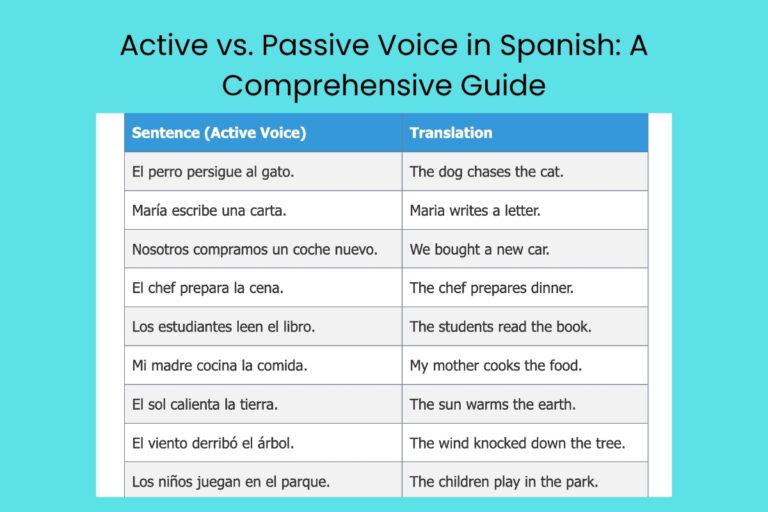
Passive Voice
Ser is used to form the passive voice in Spanish, indicating that the subject is receiving the action, not performing it.
Examples:
- El libro fue escrito por Gabriel García Márquez. (The book was written by Gabriel García Márquez.)
- La casa es construida por la compañía. (The house is being built by the company.)
Ser vs. Estar
The difference between ser and estar is a common point of confusion for Spanish learners. While both translate to “to be,” they are used in different contexts. Ser describes inherent qualities, while estar describes temporary states or conditions. Consider the acronyms DOCTOR for ser and PLACE for estar (Position, Location, Action, Condition, Emotion).
Here’s a table summarizing the key differences:
| Use | Ser | Estar |
|---|---|---|
| Description | Permanent characteristics (e.g., “Ella es alta.”) | Temporary conditions (e.g., “Ella está cansada.”) |
| Origin | Nationality, place of origin (e.g., “Soy de España.”) | Location (e.g., “Estoy en casa.”) |
| Occupation | Profession (e.g., “Soy profesor.”) | – |
| Characteristics | Inherent traits (e.g., “Es inteligente.”) | Temporary states (e.g., “Está enfermo.”) |
| Time | Time, date (e.g., “Es la una.”) | – |
| Relationships | Relationships (e.g., “Es mi hermano.”) | – |
| Possession | To whom something belongs (e.g., “Es de Juan.”) | – |
| Events | Where events take place (e.g., “La fiesta es en casa.”) | – |
| Nationality | (e.g., “Soy americano.”) | – |
| Location | – | (e.g., “Estoy aquí.”) |
| Condition | – | (e.g., “Estoy bien.”) |
| Emotion | – | (e.g., “Estoy contento.”) |
| Present Progressive | – | (e.g., “Estoy comiendo.”) |
Consider these contrasting examples:
- Ser: Él es alto. (He is tall – inherent characteristic)
- Estar: Él está cansado. (He is tired – temporary condition)
- Ser: Ella es de España. (She is from Spain – origin)
- Estar: Ella está en España. (She is in Spain – location)
Impersonal Uses of Ser
Ser is often used in impersonal constructions to express general truths, opinions, or necessities. These constructions typically begin with “es” followed by an adjective or adverb.
Examples:
- Es importante estudiar. (It is important to study.)
- Es necesario llegar temprano. (It is necessary to arrive early.)
- Es posible que llueva. (It is possible that it will rain.)
In these cases, “es” doesn’t refer to a specific subject but rather introduces a general statement or observation. The adjective or adverb that follows “es” often expresses a value judgment or a requirement.
Special Cases and Exceptions
There are a few special cases and exceptions to the general rules of using ser. These exceptions often involve nuances in meaning or context.
- With the word “muerto” (dead), estar is generally used, as death is considered a state: “Él está muerto.” (He is dead.)
- When describing the taste of something, both ser and estar can be used, but with slightly different meanings. Ser describes the inherent taste: “El café es amargo.” (Coffee is bitter.) Estar describes the taste at a particular moment: “El café está amargo.” (The coffee tastes bitter – perhaps it’s been sitting out.)
It’s important to pay attention to context and subtle differences in meaning when encountering these special cases.
Common Mistakes with Ser
One of the most common mistakes is confusing ser and estar. Remember that ser is for permanent or inherent qualities, while estar is for temporary states or conditions.
Here are some examples of common mistakes and their corrections:
| Incorrect | Correct | Explanation |
|---|---|---|
| Yo estoy alto. | Yo soy alto. | Height is an inherent characteristic, so ser is used. |
| Ella es contenta. | Ella está contenta. | Happiness is a temporary emotion, so estar is used. |
| Es siendo lunes. | Es lunes. | The correct form is “Es lunes” to indicate the day of the week. |
| La fiesta está en mi casa. | La fiesta es en mi casa. | Location of events uses “ser.” |
| Él es cansado. | Él está cansado. | “Cansado” (tired) is a temporary state, so “estar” is required. |
| Nosotros somos en la playa. | Nosotros estamos en la playa. | Location always uses “estar.” |
| Soy caliente. (Intending “I am hot”) | Tengo calor. / Estoy acalorado. | “Soy caliente” implies sexual arousal. Use “Tengo calor” (I have heat) or Estoy acalorado (I am feeling hot). |
| Mi madre es enferma. | Mi madre está enferma. | “Enferma” (sick) is a temporary condition, so “estar” is correct. |
| El agua es frío. | El agua está fría. | “Frío” (cold) describing the current state of something uses “estar.” |
| Ellos son tristes. | Ellos están tristes. | Sadness is a temporary emotion, hence “estar.” |
| Es ser importante. | Es importante. | Impersonal constructions use “es” followed by an adjective. |
| Yo soy viviendo en Madrid. | Yo vivo en Madrid. / Yo estoy viviendo en Madrid. (less common) | Use “vivir” to express living in a place. While “estar viviendo” exists, it’s less common. |
| El puerta es abierto. | La puerta está abierta. | The door being open is a condition, thus “estar.” Also, remember the gender of “puerta” is feminine. |
| Soy listo. (Intending “I am ready”) | Estoy listo. | “Soy listo” means “I am clever.” “Estoy listo” means “I am ready.” |
| La ventana es cerrada. | La ventana está cerrada. | The window being closed is a condition. |
| El es mi padre. | Él es mi padre. | Pay attention to accents. “Él” (he) needs an accent mark. |
| Yo soy muy bien. | Yo estoy muy bien. | Well-being is a condition. |
| Es ser la una. | Es la una. | Time uses “ser” directly. |
| Nosotros somos cansados. | Nosotros estamos cansados. | Fatigue is a temporary condition. |
| El libro es interesante ahora. | El libro está interesante ahora. / El libro es interesante. | If it’s *currently* interesting, use “estar.” If it’s *inherently* interesting, use “ser.” |
Practice Exercises
Complete the following sentences with the correct form of ser.
| Sentence | Answer |
|---|---|
| Yo _____ estudiante. | soy |
| Tú _____ mi amigo. | eres |
| Él _____ alto y guapo. | es |
| Nosotros _____ de España. | somos |
| Vosotros _____ inteligentes. | sois |
| Ellos _____ profesores. | son |
| ¿Qué hora _____? | es |
| Hoy _____ martes. | es |
| La casa _____ grande. | es |
| El libro _____ de María. | es |
Choose between ser and estar to complete the sentences.
| Sentence | Answer |
|---|---|
| Yo _____ cansado hoy. | estoy |
| Ella _____ mi hermana. | es |
| Nosotros _____ en la playa. | estamos |
| El agua _____ fría. | está |
| La fiesta _____ en mi casa. | es |
| El libro _____ interesante. | es / está (depending on context) |
| Ellos _____ felices. | están |
| Mi madre _____ enferma. | está |
| ¿Dónde _____ tú? | estás |
| ¿Quién _____ él? | es |
Translate the following sentences into Spanish using ser or estar.
| English Sentence | Spanish Translation |
|---|---|
| I am a doctor. | Yo soy médico. |
| You are in the park. | Tú estás en el parque. |
| He is tall. | Él es alto. |
| We are happy. | Nosotros estamos felices. |
| They are from Argentina. | Ellos son de Argentina. |
| It is two o’clock. | Son las dos. |
| The door is open. | La puerta está abierta. |
| She is my friend. | Ella es mi amiga. |
| The coffee is bitter. | El café es amargo. / El café está amargo. (depending on context) |
| It is important to study. | Es importante estudiar. |
Advanced Topics
For advanced learners, understanding the subjunctive mood with ser and the use of ser in more complex sentence structures is crucial.
- Subjunctive Mood: The subjunctive mood is often used after impersonal expressions with ser, such as “Es importante que…” (It is important that…) or “Es necesario que…” (It is necessary that…). The verb following “que” will be in the subjunctive. For example: “Es importante que estudies.” (It is important that you study.)
- Complex Sentences: Ser can be used in complex sentences to provide more detailed descriptions or explanations. For example: “La razón por la que estoy aquí es porque soy un estudiante.” (The reason I am here is because I am a student.)
These more advanced uses require a solid understanding of Spanish grammar and sentence structure.
Frequently Asked Questions
- What is the difference between “ser” and “estar”?
Ser is used for permanent or inherent characteristics, while estar is used for temporary states or conditions. Think of DOCTOR for ser (Description, Origin, Characteristics, Time, Origin, Relationships) and PLACE for estar (Position, Location, Action, Condition, Emotion).
- How do I know when to use “es” vs. “está”?
“Es” is the third-person singular form of ser, used for he/she/it/you (formal). “Está” is the third-person singular form of estar. Use the DOCTOR/PLACE guidelines to determine which verb is appropriate, then conjugate accordingly.
- Can “ser” be used to describe emotions?
Generally, no. Emotions are temporary states and therefore described with estar. However, you might use ser to describe someone’s general disposition or personality (e.g., “Él es alegre” – He is cheerful), but not their current emotional state.
- Is “ser” always used with nationalities?
Yes, nationalities are considered inherent characteristics and are always used with ser. For example, “Yo soy americano.”(I am American)
- What are some common phrases that use “ser”?
Common phrases include: “Es importante…” (It is important…), “Es necesario…” (It is necessary…), “Es la una…” (It is one o’clock…), “Es de…” (It belongs to…)
- How do I conjugate “ser” in the past tense?
In the preterite tense, ser becomes “fui, fuiste, fue, fuimos, fuisteis, fueron.” In the imperfect tense, it becomes “era, eras, era, éramos, erais, eran.” Remember that the preterite describes completed actions, while the imperfect describes habitual or ongoing actions in the past.
- Can “ser” be used with gerunds (present participles)?
No, ser is not typically used with gerunds. Gerunds usually indicate an ongoing action and are primarily used with estar to form the present progressive tense (e.g., “Estoy comiendo” – I am eating). Using ser with a gerund would be grammatically incorrect.
- Is it ever acceptable to use “ser” and “estar” interchangeably?
No, “ser” and “estar” are not generally interchangeable. Using the wrong verb can significantly alter the meaning of the sentence. While there might be very rare and nuanced situations where the choice is subjective, it’s best to adhere to the DOCTOR/PLACE guidelines for accurate communication.
- How do I form a question using “ser”?
You can form a question using ser by inverting the subject and verb, or by adding question words like “¿Quién?” (Who?), “¿Qué?” (What?), or “¿De dónde?” (From where?). For example: “¿Quién es él?” (Who is he?), “¿De dónde eres?” (Where are you from?).
- What is the passive voice with “ser”?
The passive voice with “ser” indicates that the subject receives the action. It’s formed with “ser” + past participle + “por” + agent (optional). Example: “El libro fue escrito por Juan.” (The book was written by Juan.)
Conclusion
Mastering the verb ser is a cornerstone of Spanish fluency. By understanding its conjugation, uses, and differences from estar, you can significantly improve your ability to express yourself accurately and confidently. Remember the DOCTOR acronym to recall the primary uses of ser: Description, Origin, Characteristics, Time, Origin, Relationships, Possession, Events, and passive voice. Practice regularly, pay attention to context, and don’t be afraid to make mistakes – they are a natural part of the learning process.
Continue to explore the nuances of Spanish grammar, and you’ll find that your understanding of ser will deepen over time. With consistent effort and a focus on practical application, you’ll be well on your way to mastering this essential verb and achieving your Spanish language goals. Embrace the challenges, celebrate your progress, and enjoy the journey of learning Spanish!