Mastering “To Be” in Spanish: Ser and Estar
Understanding how to express “to be” in Spanish is fundamental for any learner. Unlike English, Spanish utilizes two verbs – ser and estar – both translating to “to be,” but each used in distinct contexts. Mastering the difference between them is crucial for accurate and fluent communication. This article provides a comprehensive guide to understanding and using ser and estar, suitable for beginners and intermediate learners alike. We’ll explore their definitions, conjugations, usage rules, common mistakes, and provide ample practice exercises to solidify your understanding.
This article is designed for anyone learning Spanish, from beginners just starting their journey to intermediate learners looking to refine their understanding of these essential verbs. By the end of this guide, you’ll be able to confidently choose between ser and estar in various situations, significantly improving your Spanish accuracy and fluency.
Table of Contents
- Introduction
- Definitions of Ser and Estar
- Structural Breakdown
- Uses of Ser and Estar
- Examples of Ser and Estar
- Usage Rules
- Common Mistakes
- Practice Exercises
- Advanced Topics
- FAQ
- Conclusion
Definitions of Ser and Estar
In Spanish, the concept of “to be” is divided into two distinct verbs: ser and estar. These verbs are not interchangeable, and choosing the correct one is essential for conveying the intended meaning. Understanding their fundamental differences is the key to mastering this aspect of Spanish grammar.
Ser: Definition and Usage
The verb ser is used to describe permanent or inherent characteristics, identity, origin, nationality, profession, relationships, and essential qualities. It refers to what something *is* in its fundamental nature. Think of ser as defining the essence of a person, place, or thing.
Ser is also used to express time, date, and possession. It is used to identify and classify things, people, and ideas. When describing someone, ser often highlights their inherent qualities that are unlikely to change.
Estar: Definition and Usage
The verb estar is used to describe temporary states, conditions, emotions, locations (temporary), and ongoing actions. It focuses on how something *is* at a particular moment or in a specific circumstance. Estar describes conditions that are subject to change.
Estar is also crucial for forming the progressive tenses (e.g., “I am eating”), using the present participle (gerund). It emphasizes the current condition or location of something or someone. If the state can change easily, estar is the verb to use.
Structural Breakdown
To use ser and estar correctly, it’s essential to know their conjugations in different tenses. Here, we focus on the present tense, which is the most commonly used and fundamental for beginners.
Conjugation of Ser (Present Tense)
The present tense conjugation of ser is as follows:
| Pronoun | Conjugation | English Translation |
|---|---|---|
| Yo | Soy | I am |
| Tú | Eres | You are (informal) |
| Él/Ella/Usted | Es | He/She/You (formal) is |
| Nosotros/Nosotras | Somos | We are |
| Vosotros/Vosotras | Sois | You are (informal, plural, Spain) |
| Ellos/Ellas/Ustedes | Son | They/You (plural) are |
Understanding the different forms of ser is the first step to using it correctly in sentences. Notice the irregularity, especially in the yo, tú, and él/ella/usted forms.
Conjugation of Estar (Present Tense)
The present tense conjugation of estar is as follows:
| Pronoun | Conjugation | English Translation |
|---|---|---|
| Yo | Estoy | I am |
| Tú | Estás | You are (informal) |
| Él/Ella/Usted | Está | He/She/You (formal) is |
| Nosotros/Nosotras | Estamos | We are |
| Vosotros/Vosotras | Estáis | You are (informal, plural, Spain) |
| Ellos/Ellas/Ustedes | Están | They/You (plural) are |
Similar to ser, estar also has irregular conjugations, especially in the yo form. Notice the accent marks on several forms; these are crucial for correct pronunciation.
Uses of Ser and Estar
The correct usage of ser and estar depends on the context. Understanding the specific situations where each verb is appropriate is essential for accurate communication.
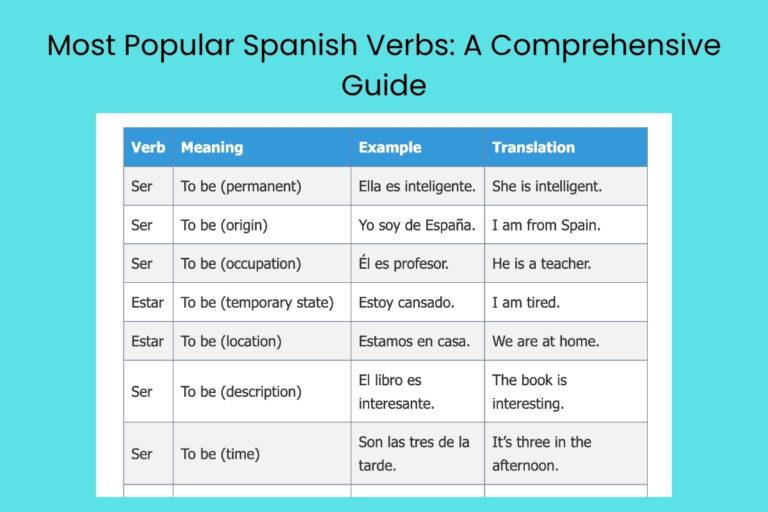
Permanent Characteristics with Ser
Use ser to describe inherent qualities, physical characteristics, and personality traits that are unlikely to change.
Examples:
- Soy alto. (I am tall.)
- Ella es inteligente. (She is intelligent.)
- El cielo es azul. (The sky is blue.)
Temporary Conditions with Estar
Use estar to describe temporary states, such as emotions, health conditions, and temporary physical states.
Examples:
- Estoy cansado. (I am tired.)
- Ella está enferma. (She is sick.)
- La puerta está abierta. (The door is open.)
Time and Date with Ser
Use ser to express time and date.
Examples:
- Son las tres de la tarde. (It is three in the afternoon.)
- Hoy es lunes. (Today is Monday.)
- Es el 15 de mayo. (It is May 15th.)
Location (Temporary) with Estar
Use estar to indicate the location of something or someone. This refers to *where* something is located at a specific time.
Examples:
- Estoy en casa. (I am at home.)
- El libro está en la mesa. (The book is on the table.)
- Madrid está en España. (Madrid is in Spain.)
Origin and Nationality with Ser
Use ser to indicate someone’s origin or nationality.
Examples:
- Soy de México. (I am from Mexico.)
- Ella es americana. (She is American.)
- Somos españoles. (We are Spanish.)
Relationships with Ser
Use ser to describe relationships between people.
Examples:
- Ella es mi hermana. (She is my sister.)
- Somos amigos. (We are friends.)
- Él es el padre de Juan. (He is Juan’s father.)
Possession with Ser
Use ser to indicate possession, often with the preposition “de.”
Examples:
- El coche es de Juan. (The car belongs to Juan.)
- La casa es de mis padres. (The house belongs to my parents.)
- El libro es mío. (The book is mine.)
Events with Ser
Use ser to describe events, especially when indicating where and when they take place.
Examples:
- La fiesta es en mi casa. (The party is at my house.)
- El concierto es el sábado. (The concert is on Saturday.)
- La reunión es a las 10 de la mañana. (The meeting is at 10 in the morning.)
Estar with the Present Participle (Gerund)
Estar is used with the present participle (gerund) to form the progressive tenses, indicating an action in progress.
Examples:
- Estoy comiendo. (I am eating.)
- Ella está leyendo. (She is reading.)
- Estamos trabajando. (We are working.)
Examples of Ser and Estar
To further illustrate the differences between ser and estar, let’s look at some detailed examples categorized by their usage.
Examples with Ser
The following table provides a variety of examples using the verb ser, highlighting different contexts and scenarios.
| Spanish Sentence | English Translation | Category |
|---|---|---|
| Yo soy estudiante. | I am a student. | Profession |
| Tú eres mi amigo. | You are my friend. | Relationship |
| Él es alto y delgado. | He is tall and thin. | Description |
| Ella es de España. | She is from Spain. | Origin |
| Usted es el doctor López. | You are Doctor López. | Identification |
| Nosotros somos felices. | We are happy. | Characteristic (Usually ‘estar’ for emotion, but here implies general disposition) |
| Vosotros sois muy amables. | You are very kind. | Characteristic |
| Ellos son mis padres. | They are my parents. | Relationship |
| Son las dos de la tarde. | It is two in the afternoon. | Time |
| Hoy es martes. | Today is Tuesday. | Date |
| La casa es grande. | The house is big. | Description |
| El libro es interesante. | The book is interesting. | Characteristic |
| La fiesta es en el club. | The party is at the club. | Event |
| El coche es de mi padre. | The car belongs to my father. | Possession |
| La verdad es importante. | The truth is important. | Essence |
| Ser o no ser, esa es la cuestión. | To be or not to be, that is the question. | Philosophical Statement |
| Es necesario estudiar. | It is necessary to study. | Necessity |
| Es importante ser honesto. | It is important to be honest. | Quality/Characteristic |
| Es un placer conocerte. | It is a pleasure to meet you. | Expression |
| La puerta es de madera. | The door is made of wood. | Material |
| El problema es complicado. | The problem is complicated. | Description |
| ¿Quién es? | Who is it? | Identification |
| ¿De quién es este libro? | Whose book is this? | Possession |
| Es obvio que tienes razón. | It’s obvious that you are right. | Observation |
| Es una buena idea. | It is a good idea. | Description |
| El café es de Colombia. | The coffee is from Colombia. | Origin |
| La clase es a las diez. | The class is at ten o’clock. | Time/Event |
These examples cover a wide range of scenarios where ser is used to describe inherent qualities, relationships, time, origin, and more.
Examples with Estar
The following table provides examples using the verb estar, demonstrating its usage in describing temporary states, conditions, locations, and ongoing actions.
| Spanish Sentence | English Translation | Category |
|---|---|---|
| Yo estoy cansado. | I am tired. | Temporary Condition |
| Tú estás en la casa. | You are at home. | Location |
| Él está comiendo. | He is eating. | Ongoing Action |
| Ella está feliz. | She is happy. | Emotion |
| Usted está equivocado. | You are mistaken. | Temporary State |
| Nosotros estamos trabajando. | We are working. | Ongoing Action |
| Vosotros estáis aprendiendo español. | You are learning Spanish. | Ongoing Action |
| Ellos están enfermos. | They are sick. | Temporary Condition |
| La puerta está cerrada. | The door is closed. | Condition |
| El libro está en la mesa. | The book is on the table. | Location |
| Estoy leyendo un libro. | I am reading a book. | Ongoing Action |
| Ella está escribiendo una carta. | She is writing a letter. | Ongoing Action |
| Estamos viviendo en Madrid. | We are living in Madrid. | Temporary Location/Condition |
| Estoy de vacaciones. | I am on vacation. | Temporary State |
| ¿Cómo estás? | How are you? | Inquiry about Condition |
| Está lloviendo. | It is raining. | Ongoing Action/Condition |
| La comida está deliciosa. | The food is delicious (right now). | Temporary State/Condition |
| Estoy listo. | I am ready. | Temporary State |
| Ellos están preocupados. | They are worried. | Emotion |
| Estamos a martes. | We are on Tuesday. (Less common, but used in some regions) | Date |
| Está nublado. | It is cloudy. | Temporary Condition |
| La tienda está abierta. | The store is open. | Condition |
| Estoy de acuerdo. | I agree. | Temporary State |
| Estamos cerca del parque. | We are near the park. | Location |
| Ella está a dieta. | She is on a diet. | Temporary Condition |
| El café está caliente. | The coffee is hot. | Temporary State/Condition |
These examples illustrate the use of estar in various temporary contexts, including emotions, locations, and ongoing actions.
Usage Rules
To master the use of ser and estar, it’s essential to understand the specific rules that govern their usage. These rules provide a framework for choosing the correct verb in different situations.
Rules for Using Ser
Here are the key rules for using the verb ser:
- Describe permanent or inherent characteristics: Use ser to describe qualities that are unlikely to change.
- Express identity and origin: Use ser to indicate who someone is and where they are from.
- Indicate profession and occupation: Use ser to state someone’s job or profession.
- Describe relationships: Use ser to explain relationships between people.
- Express time and date: Use ser to tell the time and date.
- Indicate possession: Use ser with “de” to show who owns something.
- Describe events: Use ser to indicate where and when events take place.
Rules for Using Estar
Here are the key rules for using the verb estar:
- Describe temporary states and conditions: Use estar to describe how someone feels or their current condition.
- Indicate location: Use estar to show where something or someone is located (temporarily).
- Form progressive tenses: Use estar with the present participle (gerund) to describe ongoing actions.
- Express emotions: Use estar to describe how someone is feeling emotionally.
Common Mistakes
One of the biggest challenges for Spanish learners is knowing when to use ser and when to use estar. Here are some common mistakes to avoid:
| Incorrect | Correct | Explanation |
|---|---|---|
| Yo estoy alto. | Yo soy alto. | Height is a permanent characteristic, so use ser. |
| Ella es cansada. | Ella está cansada. | Tiredness is a temporary state, so use estar. |
| La casa está grande. | La casa es grande. | Size is an inherent quality, so use ser. |
| Estoy de España. | Soy de España. | Origin is a permanent characteristic, so use ser. |
| Somos en casa. | Estamos en casa. | Location is a temporary state, so use estar. |
| El libro es en la mesa. | El libro está en la mesa. | Location is a temporary state, so use estar. |
By understanding these common mistakes, you can avoid them and improve your accuracy in Spanish.
Practice Exercises
Practice is essential to solidify your understanding of ser and estar. Here are some exercises to help you test your knowledge.
Exercise 1: Choose Ser or Estar
Choose the correct verb (ser or estar) to complete each sentence.
| Question | Answer |
|---|---|
| 1. Yo ______ estudiante. | Soy |
| 2. Ella ______ en la biblioteca. | Está |
| 3. Nosotros ______ cansados. | Estamos |
| 4. El libro ______ interesante. | Es |
| 5. Hoy ______ miércoles. | Es |
| 6. Ellos ______ de Argentina. | Son |
| 7. La puerta ______ abierta. | Está |
| 8. ¿Cómo ______ tú? | Estás |
| 9. La fiesta ______ en mi casa. | Es |
| 10. Él ______ comiendo. | Está |
Exercise 2: Fill in the Blanks
Fill in the blanks with the correct form of ser or estar.
| Question | Answer |
|---|---|
| 1. ¿De dónde ______ tú? | Eres |
| 2. Nosotros ______ felices de verte. | Estamos |
| 3. Mi madre ______ profesora. | Es |
| 4. El café ______ caliente. | Está |
| 5. Las ventanas ______ cerradas. | Están |
| 6. ______ las cinco de la tarde. | Son |
| 7. Yo ______ enfermo hoy. | Estoy |
| 8. Ellos ______ mis amigos. | Son |
| 9. La capital de España ______ Madrid. | Es |
| 10. El perro ______ durmiendo. | Está |
Advanced Topics
For advanced learners, understanding the nuances and subtleties of ser and estar can further refine their Spanish skills.
Ser vs. Estar with Adjectives
The choice between ser and estar can significantly change the meaning of an adjective. For example:
- Ser listo (to be clever, intelligent) vs. Estar listo (to be ready)
- Ser aburrido (to be boring) vs. Estar aburrido (to be bored)
- Ser bueno (to be good, moral) vs. Estar bueno (to be tasty/attractive)
These examples highlight how the same adjective can have different meanings depending on whether it’s used with ser or estar.
Idiomatic Expressions
Some idiomatic expressions use ser or estar in specific ways that may not directly follow the standard rules. Learning these expressions can enhance your fluency.
Examples:
- Estar de acuerdo (to agree)
- Estar de broma (to be joking)
- Ser pan comido (to be a piece of cake)
FAQ
Here are some frequently asked questions about ser and estar:
- Q: How can I easily remember when to use ser vs. estar?
A: Think of ser for permanent characteristics (DOCTOR: Description, Occupation, Characteristic, Time, Origin, Relationship) and estar for temporary states and conditions (PLACE: Position, Location, Action, Condition, Emotion). These acronyms can help you recall the main uses of each verb.
- Q: Can the choice of ser or estar change the meaning of a sentence?
A: Absolutely! As seen with adjectives like listo and aburrido, the meaning can change drastically. Understanding these nuances is crucial for accurate communication.
- Q: Is it always clear which verb to use?
A: While most cases are straightforward, some situations can be ambiguous, especially with adjectives describing personality or state. Context is key in these cases.
- Q: What is the most common mistake learners make with ser and estar?
A: The most common mistake is using ser for temporary states or emotions, such as saying “Yo soy cansado” instead of “Yo estoy cansado.”
- Q: Are there regional differences in the usage of ser and estar?
A: While the fundamental rules remain the same, some regions may have slight variations in idiomatic expressions or less common usages. However, the core principles apply universally.
- Q: How does the use of ser and estar affect fluency in Spanish?
A: Mastering ser and estar is essential for fluency. Correct usage demonstrates a solid understanding of Spanish grammar and allows for more natural and accurate communication.
- Q: What is the best way to practice using ser and estar?
A: The best way to practice is through consistent exposure and active application. Read Spanish texts, listen to native speakers, and practice writing and speaking, paying close attention to the context in which each verb is used. Focus on error correction and seek feedback from native speakers or language partners.
- Q: Can I use ser and estar in past tenses?
A: Yes, both ser and estar have conjugations in all tenses. The same principles apply; ser is used for more permanent or inherent qualities, while estar is used for temporary states or conditions, regardless of the tense.
- Q: How can I improve my understanding of ser and estar with adjectives?
A: Create flashcards with adjectives and practice using them with both ser and estar. Write example sentences and ask a native speaker to check if the meaning is clear and correct. Pay attention to context clues when reading or listening to Spanish.
- Q: Are there any online resources that can help me practice ser and estar?
A: Yes, many websites and apps offer interactive exercises, quizzes, and explanations of ser and estar. Look for resources that provide immediate feedback and allow you to track your progress. Some popular options include Duolingo, SpanishDict, and online grammar websites.
Conclusion
Mastering the difference between ser and estar is a crucial step in your Spanish learning journey. While it may seem challenging at first, understanding the core concepts and practicing consistently will significantly improve your accuracy and fluency. Remember that ser describes inherent qualities and permanent characteristics, while estar describes temporary states, conditions, and locations.
Continue to practice with real-world examples, pay attention to context, and don’t be afraid to make mistakes – they are a natural part of the learning process. With patience and dedication, you’ll confidently navigate the nuances of ser and estar and elevate your Spanish to the next level. Keep practicing, and you’ll soon be using these verbs with ease and confidence.