Expressing Affection: Saying “I Like You” in Spanish
Learning how to express your feelings is a crucial part of mastering any language. Knowing how to say “I like you” in Spanish opens doors to building connections, expressing affection, and deepening relationships with Spanish speakers.
This phrase, while seemingly simple, has nuanced variations that depend on the context, the level of intimacy, and the specific region. Understanding these nuances is essential for effective and appropriate communication.
This article will guide you through the different ways to express “I like you” in Spanish, providing examples, cultural insights, and practical exercises to help you confidently convey your feelings. Whether you’re a beginner or an advanced learner, this comprehensive guide will equip you with the necessary tools to express your affection in Spanish authentically and accurately.
This topic is fundamental in Spanish grammar because it deals with verb conjugation, pronoun usage, and idiomatic expressions. Mastering these aspects will significantly improve your overall fluency and cultural understanding.
This guide benefits language learners of all levels, from beginners taking their first steps in Spanish to advanced students aiming to refine their expressive abilities. It also caters to travelers, students abroad, and anyone seeking to build meaningful relationships with Spanish speakers.
Table of Contents
- Introduction
- Definition: “I Like You” in Spanish
- Structural Breakdown
- Types and Categories of “I Like You”
- Examples
- Usage Rules
- Common Mistakes
- Practice Exercises
- Advanced Topics
- FAQ
- Conclusion
Definition: “I Like You” in Spanish
The phrase “I like you” in Spanish isn’t a direct translation like many other languages. Instead, Spanish uses different verbs and structures to convey the same sentiment with varying degrees of intensity and context. The most common way to express “I like you” is by using the verb gustar, which literally means “to be pleasing to.” However, alternatives like caer bien and phrases expressing attraction offer more nuanced ways to communicate your feelings. Understanding these alternatives and their specific connotations is crucial for effective communication in Spanish.
The choice of expression depends on several factors, including the nature of the relationship (friendship, romantic interest), the level of formality, and the specific nuance you want to convey. For instance, using gustar might be suitable for expressing general liking, while me atraes is more appropriate for expressing romantic attraction. Let’s explore the different ways to say “I like you” in Spanish and their respective nuances.
Structural Breakdown
The structure for expressing “I like you” in Spanish varies depending on the verb used. The most common structure involves the verb gustar, which requires an indirect object pronoun to indicate who is doing the liking. The structure is as follows: Indirect Object Pronoun + gustar + Subject. Here, the “subject” is the person or thing that is liked, and the indirect object pronoun indicates who likes it. This structure is different from English, where the subject typically comes before the verb.
For example, “I like you” translates to “Me gustas tú.” Here, me is the indirect object pronoun (to me), gustas is the conjugated form of gustar (pleases), and tú is the subject (you). The literal translation is “You are pleasing to me.” Understanding this structure is essential for correctly using gustar and avoiding common errors. The verb caer bien follows a similar structure. Let’s examine each of these structures in more detail.
Types and Categories of “I Like You”
There are several ways to express “I like you” in Spanish, each with its own nuance and level of intensity. The most common methods involve using the verbs gustar and caer bien, but expressions of attraction are also frequently used. Let’s explore these different categories and their specific uses.
Using Gustar
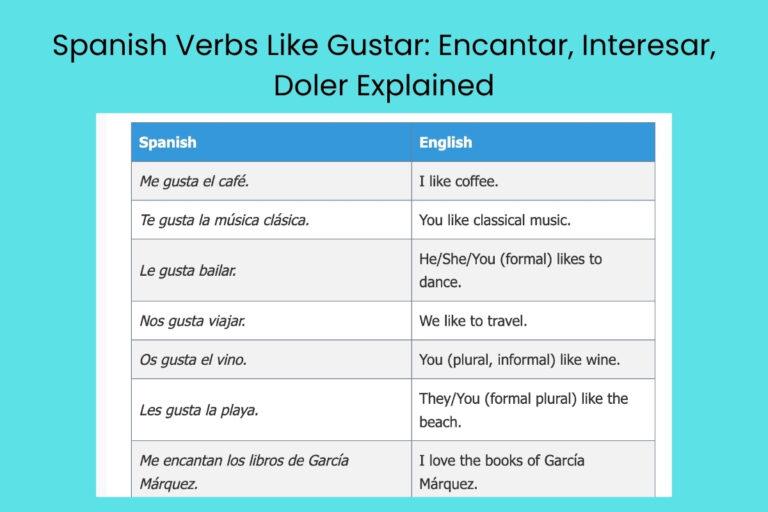
The verb gustar is the most common way to express liking in Spanish. However, it’s crucial to understand its unique structure, which is different from English. The verb gustar literally means “to be pleasing to,” so the person who likes something is the indirect object, not the subject. The thing that is liked is the subject of the sentence. This can be confusing for English speakers, but with practice, it becomes more natural.
To say “I like you” using gustar, you would say “Me gustas tú.” The pronoun me indicates “to me,” and gustas is the second-person singular form of gustar, agreeing with tú (you). This construction is used to express a general liking for someone, whether as a friend or something more.
Using Caer Bien
The verb caer bien means “to make a good impression” or “to get along well with.” Saying “Me caes bien” is another way to express that you like someone, but it often implies a more platonic or friendly liking. It suggests that you enjoy their company and find them agreeable. The structure is similar to gustar, with the indirect object pronoun indicating who is doing the liking.
Unlike gustar, which can be used to express romantic interest, caer bien is generally reserved for expressing friendly liking. It’s a safe and neutral way to convey that you enjoy someone’s company without implying anything more. This makes it a useful phrase to use in various social situations.
Expressing Attraction
To express romantic attraction, you can use phrases like “Me atraes,” which means “I am attracted to you.” This phrase is more direct and implies a romantic or physical interest. It’s a stronger expression of liking than gustar or caer bien and should be used when you want to clearly convey your romantic feelings.
Other phrases that express attraction include “Siento atracción por ti” (I feel attraction for you) and “Estoy interesado/a en ti” (I am interested in you). These phrases are more formal and direct, and they leave no room for ambiguity. The choice of phrase depends on the level of formality and the intensity of your feelings.
Other Expressions of Liking
Besides gustar, caer bien, and expressions of attraction, there are other ways to convey liking in Spanish. These expressions often involve adjectives or descriptive phrases that communicate your positive feelings about someone. For example, you could say “Me gusta tu personalidad” (I like your personality) or “Admiro tu sentido del humor” (I admire your sense of humor). These phrases are more specific and allow you to express exactly what you like about the person.
Another common expression is “Eres muy agradable” (You are very pleasant). This phrase is polite and conveys that you enjoy being around the person. It’s a good option for expressing liking in a formal or professional setting. The key is to choose an expression that accurately reflects your feelings and the context of the situation.
Examples
To solidify your understanding of how to say “I like you” in Spanish, let’s explore various examples using gustar, caer bien, expressions of attraction, and other descriptive phrases. These examples will illustrate the nuances and contexts in which each expression is appropriate.
Gustar Examples
The following table provides examples of using gustar to express liking in different contexts. Note the structure and the agreement of the verb with the subject.
| Spanish | English Translation | Context |
|---|---|---|
| Me gustas tú. | I like you. | General liking, can be romantic or platonic. |
| Me gusta tu sonrisa. | I like your smile. | Specific liking, focusing on a particular feature. |
| Me gusta cómo piensas. | I like the way you think. | Appreciating someone’s intellect or perspective. |
| Me gusta tu sentido del humor. | I like your sense of humor. | Expressing appreciation for their humor. |
| Me gusta pasar tiempo contigo. | I like spending time with you. | Expressing enjoyment of their company. |
| Me gusta tu optimismo. | I like your optimism. | Expressing admiration for their positive attitude. |
| Me gusta tu forma de ser. | I like the way you are. | Expressing liking for their personality. |
| Me gusta tu valentía. | I like your courage. | Expressing admiration for their bravery. |
| Me gusta tu honestidad. | I like your honesty. | Expressing appreciation for their truthfulness. |
| Me gusta que seas tan amable. | I like that you are so kind. | Expressing appreciation for their kindness. |
| Me gustan tus ideas. | I like your ideas. | Expressing appreciation for their thoughts. |
| Me gusta tu entusiasmo. | I like your enthusiasm. | Expressing appreciation for their energy. |
| Me gusta tu dedicación. | I like your dedication. | Expressing appreciation for their commitment. |
| Me gusta tu paciencia. | I like your patience. | Expressing appreciation for their patience. |
| Me gusta tu creatividad. | I like your creativity. | Expressing appreciation for their creative abilities. |
| Me gusta tu inteligencia. | I like your intelligence. | Expressing appreciation for their intelligence. |
| Me gusta tu sencillez. | I like your simplicity. | Expressing appreciation for their simplicity. |
| Me gusta tu elegancia. | I like your elegance. | Expressing appreciation for their elegance. |
| Me gusta tu generosidad. | I like your generosity. | Expressing appreciation for their generosity. |
| Me gusta tu espontaneidad. | I like your spontaneity. | Expressing appreciation for their spontaneity. |
| Me gusta tu humildad. | I like your humility. | Expressing appreciation for their humility. |
| Me gusta tu resiliencia. | I like your resilience. | Expressing appreciation for their resilience. |
| Me gusta tu autenticidad. | I like your authenticity. | Expressing appreciation for their authenticity. |
| Me gusta tu perseverancia. | I like your perseverance. | Expressing appreciation for their perseverance. |
| Me gusta tu lealtad. | I like your loyalty. | Expressing appreciation for their loyalty. |
| Me gusta tu amabilidad. | I like your kindness. | Expressing appreciation for their kindness. |
These examples demonstrate the versatility of gustar in expressing liking for various aspects of a person, from their physical features to their personality traits.
Caer Bien Examples
The following table illustrates the use of caer bien to express friendly liking. Remember that caer bien implies that you enjoy someone’s company and find them agreeable.
| Spanish | English Translation | Context |
|---|---|---|
| Me caes bien. | I like you (as a friend). | Expressing friendly liking. |
| Me caes muy bien. | I like you very much (as a friend). | Expressing a stronger friendly liking. |
| Siempre me has caído bien. | I have always liked you (as a friend). | Expressing a long-standing friendly liking. |
| Me caes bien desde el primer momento. | I liked you from the first moment (as a friend). | Expressing immediate friendly liking. |
| Es fácil que me caigas bien. | It’s easy for me to like you (as a friend). | Expressing that they are easy to get along with. |
| Creo que me vas a caer bien. | I think I’m going to like you (as a friend). | Expressing anticipation of friendly liking. |
| Me caen bien tus amigos. | I like your friends (as friends). | Expressing liking for their social circle, implying you like them too. |
| A todo el mundo le caes bien. | Everyone likes you (as a friend). | Expressing that they are generally well-liked. |
| No sé por qué, pero me caes bien. | I don’t know why, but I like you (as a friend). | Expressing inexplicable friendly liking. |
| Me caes bien porque eres auténtico/a. | I like you because you are authentic (as a friend). | Expressing friendly liking based on their authenticity. |
| Me caes bien porque eres honesto/a. | I like you because you are honest (as a friend). | Expressing friendly liking based on their honesty. |
| Me caes bien porque eres divertido/a. | I like you because you are fun (as a friend). | Expressing friendly liking based on their fun personality. |
| Me caes bien porque eres amable. | I like you because you are kind (as a friend). | Expressing friendly liking based on their kindness. |
| Me caes bien porque eres inteligente. | I like you because you are intelligent (as a friend). | Expressing friendly liking based on their intelligence. |
| Me caes bien porque eres generoso/a. | I like you because you are generous (as a friend). | Expressing friendly liking based on their generosity. |
| Me caes bien porque eres comprensivo/a. | I like you because you are understanding (as a friend). | Expressing friendly liking based on their understanding nature. |
| Me caes bien porque eres paciente. | I like you because you are patient (as a friend). | Expressing friendly liking based on their patience. |
| Me caes bien porque eres valiente. | I like you because you are brave (as a friend). | Expressing friendly liking based on their bravery. |
| Me caes bien porque eres leal. | I like you because you are loyal (as a friend). | Expressing friendly liking based on their loyalty. |
| Me caes bien porque eres creativo/a. | I like you because you are creative (as a friend). | Expressing friendly liking based on their creativity. |
| Me caes bien porque eres optimista. | I like you because you are optimistic (as a friend). | Expressing friendly liking based on their optimism. |
| Me caes bien porque eres humilde. | I like you because you are humble (as a friend). | Expressing friendly liking based on their humility. |
| Me caes bien porque eres sincero/a. | I like you because you are sincere (as a friend). | Expressing friendly liking based on their sincerity. |
| Me caes bien porque eres responsable. | I like you because you are responsible (as a friend). | Expressing friendly liking based on their responsibility. |
| Me caes bien porque eres trabajador/a. | I like you because you are hardworking (as a friend). | Expressing friendly liking based on their work ethic. |
These examples showcase how caer bien is used to express a positive, friendly connection with someone.
Attraction Examples
The following table provides examples of expressing romantic attraction in Spanish. These phrases are more direct and imply a deeper level of interest.
| Spanish | English Translation | Context |
|---|---|---|
| Me atraes. | I am attracted to you. | Expressing romantic attraction. |
| Me atraes mucho. | I am very attracted to you. | Expressing strong romantic attraction. |
| Siento atracción por ti. | I feel attraction for you. | Expressing romantic feelings. |
| Estoy interesado/a en ti. | I am interested in you. | Expressing romantic interest. |
| Me siento atraído/a por ti. | I feel attracted to you. | Expressing romantic feelings. |
| Hay algo en ti que me atrae. | There’s something about you that attracts me. | Expressing romantic attraction due to an unidentifiable quality. |
| No puedo evitar sentirme atraído/a por ti. | I can’t help but feel attracted to you. | Expressing involuntary romantic attraction. |
| Desde el primer momento me sentí atraído/a por ti. | From the first moment I felt attracted to you. | Expressing immediate romantic attraction. |
| Tu personalidad me atrae mucho. | Your personality attracts me a lot. | Expressing romantic attraction based on their personality. |
| Tu inteligencia me atrae. | Your intelligence attracts me. | Expressing romantic attraction based on their intelligence. |
| Tu sentido del humor me atrae. | Your sense of humor attracts me. | Expressing romantic attraction based on their sense of humor. |
| Tu forma de ser me atrae. | The way you are attracts me. | Expressing romantic attraction based on their overall personality. |
| Me encanta tu energía, me atrae mucho. | I love your energy, it attracts me a lot. | Expressing romantic attraction based on their energy. |
| Me atrae tu pasión por lo que haces. | I am attracted to your passion for what you do. | Expressing romantic attraction based on their passion. |
| Me atrae tu forma de ver el mundo. | I am attracted to your way of seeing the world. | Expressing romantic attraction based on their worldview. |
| Tu voz me atrae. | Your voice attracts me. | Expressing romantic attraction based on their voice. |
| Tus ojos me atraen. | Your eyes attract me. | Expressing romantic attraction based on their eyes. |
| Tu sonrisa me atrae. | Your smile attracts me. | Expressing romantic attraction based on their smile. |
| Tu confianza me atrae mucho. | Your confidence attracts me a lot. | Expressing romantic attraction based on their confidence. |
| Me atrae tu vulnerabilidad. | I am attracted to your vulnerability. | Expressing romantic attraction based on their vulnerability. |
| Estoy enamorado/a de ti. | I am in love with you. | Expressing being in love. |
These examples demonstrate how to express romantic feelings in Spanish with varying degrees of intensity.
Other Expressions Examples
The following table presents other ways to express liking in Spanish, using adjectives and descriptive phrases to convey your positive feelings.
| Spanish | English Translation | Context |
|---|---|---|
| Eres muy agradable. | You are very pleasant. | Expressing that someone is enjoyable to be around. |
| Me gusta tu personalidad. | I like your personality. | Expressing appreciation for someone’s personality. |
| Admiro tu sentido del humor. | I admire your sense of humor. | Expressing admiration for their humor. |
| Valoro mucho tu amistad. | I value your friendship a lot. | Expressing appreciation for their friendship. |
| Disfruto mucho tu compañía. | I really enjoy your company. | Expressing enjoyment of their company. |
| Eres una persona maravillosa. | You are a wonderful person. | Complimenting someone’s character. |
| Tienes un gran corazón. | You have a big heart. | Complimenting someone’s kindness and generosity. |
| Eres muy especial para mí. | You are very special to me. | Expressing that someone is important to you. |
| Me haces sentir feliz. | You make me feel happy. | Expressing that someone brings you joy. |
| Aprecio mucho tu sinceridad. | I really appreciate your sincerity. | Expressing appreciation for their honesty. |
| Me encanta tu forma de pensar. | I love the way you think. | Expressing appreciation for their intellect. |
| Eres muy interesante. | You are very interesting. | Expressing that someone is fascinating to talk to. |
| Eres una inspiración para mí. | You are an inspiration to me. | Expressing that someone motivates you. |
| Me encanta pasar tiempo contigo. | I love spending time with you. | Expressing enjoyment of their company. |
| Eres una persona muy valiosa. | You are a very valuable person. | Expressing that someone is important and appreciated. |
| Tu presencia me alegra el día. | Your presence brightens my day. | Expressing that someone’s presence brings you joy. |
| Eres una persona increíble. | You are an incredible person. | Complimenting someone’s character. |
| Me siento muy afortunado/a de conocerte. | I feel very lucky to know you. | Expressing gratitude for their presence in your life. |
| Eres una persona muy importante en mi vida. | You are a very important person in my life. | Expressing that someone plays a significant role in your life. |
| Me encanta tu sentido de la aventura. | I love your sense of adventure. | Expressing appreciation for their adventurous spirit. |
| Eres muy talentoso/a. | You are very talented. | Expressing admiration for their talents. |
| Eres muy divertido/a. | You are very fun. | Expressing that someone is enjoyable to be around. |
| Eres muy amable. | You are very kind. | Expressing appreciation for their kindness. |
| Eres muy generoso/a. | You are very generous. | Expressing appreciation for their generosity. |
| Eres muy paciente. | You are very patient. | Expressing appreciation for their patience. |
These diverse expressions allow you to convey your liking in a more nuanced and personalized way.
Usage Rules
Understanding the usage rules for expressing “I like you” in Spanish is crucial for avoiding errors and communicating effectively. These rules govern the proper use of gustar, caer bien, pronoun placement, and the distinction between formal and informal language.
Gustar Usage Rules
The verb gustar follows specific rules that can be challenging for English speakers. The most important rule is that the person who likes something is the indirect object, not the subject. The thing that is liked is the subject of the sentence. Therefore, the verb gustar must agree with the thing that is liked, not the person doing the liking.
For example, if you like one thing, you would say “Me gusta” (it pleases me). If you like multiple things, you would say “Me gustan” (they please me). The indirect object pronoun (me, te, le, nos, os, les) indicates who is doing the liking. It’s essential to choose the correct pronoun to accurately convey your feelings.
Caer Bien Usage Rules
The verb caer bien follows similar rules to gustar. The person who likes someone is the indirect object, and the verb must agree with the person who is liked. So, “Me caes bien” means “You make a good impression on me” or “I like you (as a friend).” The indirect object pronoun indicates who is making the impression, and the verb agrees with the person being liked.
Unlike gustar, caer bien is almost always used in the singular form because you are generally referring to one person making an impression. However, you could use it in the plural if you are referring to a group of people, such as “Me caen bien tus amigos” (I like your friends).
Pronoun Placement
In Spanish, indirect object pronouns typically come before the verb. This is different from English, where pronouns usually come after the verb. So, instead of saying “I like you,” you would say “Me gustas” (To me, you are pleasing). The pronoun me comes before the verb gustas.
However, there are exceptions to this rule. If the verb is an infinitive or a gerund, the pronoun can be attached to the end of the verb. For example, “Quiero gustarte” (I want to please you) or “Estoy gustándote” (I am pleasing you). In these cases, the pronoun is attached to the end of the infinitive (gustar) or the gerund (gustando).
Formal vs. Informal
When expressing “I like you” in Spanish, it’s important to consider the level of formality required by the situation. In informal settings, you can use the pronoun tú (you, informal) and the corresponding verb conjugation. For example, “Me gustas tú” is appropriate for friends, family, or romantic interests.
In formal settings, you should use the pronoun usted (you, formal) and the corresponding verb conjugation. For example, “Me gusta usted” is appropriate for someone you don’t know well, someone older than you, or someone in a position of authority. Using the correct level of formality is crucial for showing respect and avoiding misunderstandings.
Common Mistakes
When learning how to say “I like you” in Spanish, it’s common to make mistakes, especially with the verb gustar. Understanding these common errors can help you avoid them and improve your accuracy.
One common mistake is using the wrong word order, such as saying “Yo te gusto” instead of “Tú me gustas.” The correct order is indirect object pronoun + verb + subject. Another mistake is using the wrong verb conjugation, such as saying “Me gusta tú” instead of “Me gustas tú.” The verb must agree with the subject (tú), not the indirect object (me).
Another common error is confusing gustar with querer (to want or to love). While querer can express affection, it’s not the same as “I like you.” Saying “Te quiero” means “I love you” or “I care about you,” which is a stronger expression of affection than “I like you.” It’s important to choose the right verb to accurately convey your feelings.
Here’s a table highlighting some common mistakes and their corrections:
| Incorrect | Correct | Explanation |
|---|---|---|
| Yo te gusto. | Tú me gustas. | Incorrect word order. |
| Me gusta tú. | Me gustas tú. | Incorrect verb conjugation. |
| Te quiero. | Me gustas (or other appropriate phrase). | Using “I love you” instead of “I like you.” |
| Me cae bien tú. | Me caes bien. | “Tú” is redundant after the verb. |
Practice Exercises
To reinforce your understanding
To reinforce your understanding of how to express “I like you” in Spanish, let’s engage in some practical exercises. These exercises will help you translate phrases, fill in the blanks, and correct errors related to expressing affection in Spanish.
Exercise 1: Translation
Translate the following sentences from English to Spanish, using the appropriate expressions of liking.
- I like you (general liking).
- I like your smile.
- I like you as a friend.
- I am attracted to you.
- I like your personality.
Answers:
- Me gustas tú.
- Me gusta tu sonrisa.
- Me caes bien.
- Me atraes.
- Me gusta tu personalidad.
Exercise 2: Fill in the Blanks
Fill in the blanks with the correct form of gustar or caer bien, and the appropriate pronoun.
- A mí me _________ tu sentido del humor.
- A ti te _________ mis amigos, ¿verdad?
- A él le _________ mucho hablar contigo.
- A nosotros nos _________ ir al cine contigo.
- A vosotros os _________ las clases de español.
Answers:
- A mí me gusta tu sentido del humor.
- A ti te caen bien mis amigos, ¿verdad?
- A él le gusta mucho hablar contigo.
- A nosotros nos gusta ir al cine contigo.
- A vosotros os gustan las clases de español.
Exercise 3: Error Correction
Identify and correct the errors in the following sentences.
- Yo te gusto mucho.
- Me gusta tú personalidad.
- Te cae bien a mí.
- A ella le gustan yo.
- Nosotros te gustamos.
Answers:
- Yo te gusto mucho. Tú me gustas mucho.
- Me gusta tú personalidad. Me gusta tu personalidad.
- Te cae bien a mí. Me caes bien.
- A ella le gustan yo. A ella le gusto yo.
- Nosotros te gustamos. Tú nos gustas.
Advanced Topics
For those looking to deepen their understanding of expressing affection in Spanish, it’s essential to explore regional variations and idiomatic expressions. These advanced topics will help you communicate more authentically and effectively.
Regional Variations
The way people express “I like you” in Spanish can vary from region to region. For example, in some Latin American countries, it’s common to use the phrase “Me agradas,” which is similar to “Me caes bien” but may have slightly different connotations. In Spain, you might hear “Molas,” which is a slang term for “I like you” or “I like it,” but it’s very informal and should be used with caution.
Understanding these regional variations can help you better understand the nuances of the language and avoid misunderstandings. It’s always a good idea to listen to native speakers and observe how they express affection in different contexts.
Idiomatic Expressions
Spanish is rich in idiomatic expressions that can add color and depth to your communication. While there isn’t a direct idiomatic equivalent to “I like you,” there are phrases that convey similar sentiments in creative and expressive ways. For example, you might say “Tienes ángel” (You have an angel), which means that someone has a special charm or appeal. Or you could say “Eres un sol” (You are a sun), which means that someone is bright and cheerful and brings joy to others.
These idiomatic expressions can make your Spanish sound more natural and authentic. However, it’s important to use them correctly and in appropriate contexts.
Learning these expressions takes time and practice, but it’s well worth the effort.
FAQ
How do I say “I like you” in a romantic way?
Use phrases like “Me atraes” (I am attracted to you) or “Estoy interesado/a en ti” (I am interested in you). These phrases are more direct and imply a romantic interest.
Is “Me gustas” always romantic?
Not necessarily. “Me gustas” can be used to express general liking, but it can also have romantic connotations depending on the context and your tone of voice.
What’s the difference between “Me gustas” and “Me caes bien”?
“Me gustas” expresses a general liking, which can be romantic or platonic. “Me caes bien” implies a friendly liking and that you enjoy someone’s company.
How do I use “gustar” correctly?
Remember that the person who likes something is the indirect object, not the subject. The verb “gustar” must agree with the thing that is liked, not the person doing the liking. For example, “Me gusta el café” (I like coffee) and “Me gustan los libros” (I like books).
Can I use “Te quiero” to say “I like you”?
While “Te quiero” expresses affection, it means “I love you” or “I care about you,” which is a stronger expression than “I like you.” It’s best to use “Me gustas” or “Me caes bien” to express liking.
Conclusion
Expressing “I like you” in Spanish involves understanding the nuances of verbs like gustar and caer bien, as well as expressions of attraction and other descriptive phrases. By mastering these different ways of conveying your feelings, you can build stronger connections with Spanish speakers and communicate more effectively. Remember to consider the context, level of formality, and your specific intentions when choosing the appropriate expression. With practice and attention to detail, you can confidently express your affection in Spanish and deepen your relationships with others.