Preterite vs. Imperfect: Verbs with Shifting Meanings
Understanding the nuances of the preterite and imperfect tenses is crucial for mastering Spanish. While both are past tenses, their usage dictates how an action is viewed in time – whether as a completed event or as an ongoing, habitual action.
Some verbs undergo a significant shift in meaning depending on which tense is used, impacting the overall message conveyed. This article delves into these verbs, providing clear explanations, examples, and practice exercises to help you navigate this important aspect of Spanish grammar.
This guide is beneficial for intermediate to advanced Spanish learners seeking to refine their understanding of past tense usage and improve their communication skills.
Table of Contents
- Introduction
- Definitions: Preterite and Imperfect Tenses
- Structural Breakdown
- Verbs That Change Meaning
- Examples
- Usage Rules
- Common Mistakes
- Practice Exercises
- Advanced Topics
- FAQ
- Conclusion
Definitions: Preterite and Imperfect Tenses
The preterite tense (pretérito indefinido) in Spanish is used to describe actions that were completed in the past. These actions have a definite beginning and end, and they are often seen as isolated events. It’s used for actions that happened once, actions that interrupted another action, or actions that advanced the story along.
The imperfect tense (pretérito imperfecto), on the other hand, describes ongoing or habitual actions in the past. It’s used for descriptions, background information, repeated actions, and actions that were in progress when something else happened. The imperfect tense gives a sense of “used to” or “was/were -ing.”
Structural Breakdown
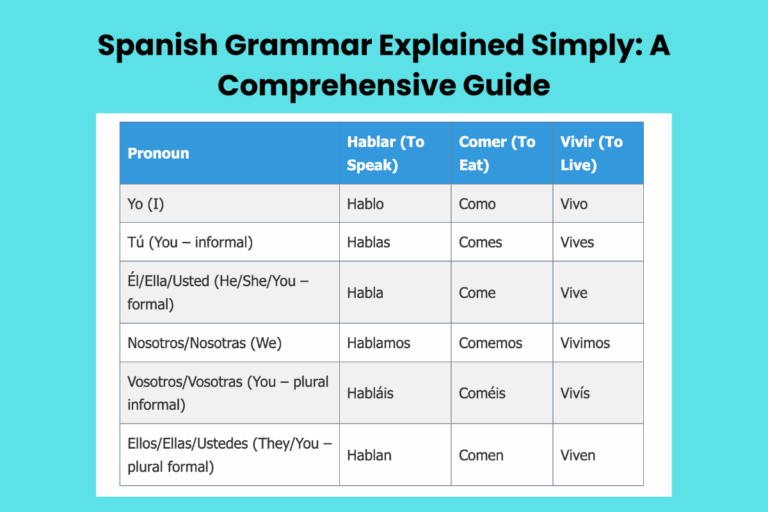
The preterite and imperfect tenses have distinct conjugations. Here’s a brief overview:
Preterite Conjugations (Regular Verbs):
- -ar verbs: -é, -aste, -ó, -amos, -asteis, -aron
- -er/-ir verbs: -í, -iste, -ió, -imos, -isteis, -ieron
Imperfect Conjugations (Regular Verbs):
- -ar verbs: -aba, -abas, -aba, -ábamos, -abais, -aban
- -er/-ir verbs: -ía, -ías, -ía, -íamos, -íais, -ían
Irregular verbs exist in both tenses, and their conjugations must be memorized. The key to understanding the shift in meaning is not just knowing the conjugations, but understanding the *context* in which they are used.
Verbs That Change Meaning
Several verbs in Spanish undergo a significant change in meaning depending on whether they are used in the preterite or the imperfect tense. Let’s explore some of the most common ones.
Conocer (To Know/To Meet)
In the imperfect, conocer means “to know” someone or to be acquainted with a place or thing. It describes a state of familiarity.
In the preterite, conocer means “to meet” someone for the first time or to become acquainted with a place or thing.
Saber (To Know/To Find Out)
In the imperfect, saber means “to know” a fact or information. It describes a state of knowledge.
In the preterite, saber means “to find out” or “to learn” something. It describes the action of acquiring knowledge.
Poder (To Be Able To/To Succeed In)
In the imperfect, poder means “to be able to” or “to have the ability to” do something. It describes a state of capability.
In the preterite, poder means “to succeed in” doing something or “to manage to” do something. It indicates the successful completion of an action.
Querer (To Want/To Try)
In the imperfect, querer means “to want” or “to desire” something. It describes a state of wanting.
In the preterite, querer means “to try” to do something. It indicates an attempt, regardless of whether it was successful.
No Querer (Not To Want/To Refuse)
In the imperfect, no querer means “not to want” something. It describes a state of not wanting.
In the preterite, no querer means “to refuse” to do something. It indicates a specific act of refusal.
Tener Que (To Have To/Had To and Did)
In the imperfect, tener que means “had to” or “was supposed to” do something. It indicates an obligation that existed in the past, but doesn’t specify if it was fulfilled.
In the preterite, tener que means “had to and did” something. It describes the completion of an obligation in the past.
Examples
The following tables provide examples of how these verbs change meaning depending on the tense used. Pay close attention to the context in each sentence.
Table 1: Examples of Conocer in Preterite and Imperfect
| Tense | Sentence | Translation |
|---|---|---|
| Imperfect | Conocía a María cuando era niño. | I knew Maria when I was a child. |
| Preterite | Conocí a María ayer. | I met Maria yesterday. |
| Imperfect | Conocíamos bien la ciudad. | We knew the city well. |
| Preterite | Conocimos la ciudad durante nuestras vacaciones. | We got to know the city during our vacation. |
| Imperfect | No te conocía con barba. | I didn’t know you with a beard. |
| Preterite | Te conocí en la fiesta de Juan. | I met you at Juan’s party. |
| Imperfect | Conocía la respuesta a la pregunta. | I knew the answer to the question. |
| Preterite | Conocí la verdad después de la investigación. | I found out the truth after the investigation. |
| Imperfect | Conocía muchos detalles sobre su vida. | I knew many details about his life. |
| Preterite | Conocí su secreto por accidente. | I learned his secret by accident. |
| Imperfect | Conocía a todos los profesores de la universidad. | I knew all the professors at the university. |
| Preterite | Conocí al nuevo director la semana pasada. | I met the new director last week. |
| Imperfect | Conocía la canción desde hace años. | I had known the song for years. |
| Preterite | Conocí la canción en la radio. | I heard the song on the radio. |
| Imperfect | Conocía bien la región vinícola. | I knew the wine region well. |
| Preterite | Conocí la región vinícola durante un viaje. | I got to know the wine region during a trip. |
| Imperfect | Conocía su reputación. | I knew his reputation. |
| Preterite | Conocí su lado oscuro en ese momento. | I became aware of his dark side at that moment. |
| Imperfect | Conocía la historia de su familia. | I knew the history of his family. |
| Preterite | Conocí la verdadera historia ayer. | I found out the real story yesterday. |
| Imperfect | Conocía a la gente del pueblo. | I knew the people in the town. |
| Preterite | Conocí a los nuevos vecinos ayer. | I met the new neighbors yesterday. |
| Imperfect | Conocía el camino al parque. | I knew the way to the park. |
| Preterite | Conocí el camino secreto por un mapa. | I learned the secret way through a map. |
| Imperfect | Conocía sus intenciones. | I knew his intentions. |
| Preterite | Conocí sus verdaderas intenciones al final. | I realized his true intentions in the end. |
This table illustrates how *conocer* changes from describing a state of knowing to describing the act of meeting or becoming aware.
Table 2: Examples of Saber in Preterite and Imperfect
| Tense | Sentence | Translation |
|---|---|---|
| Imperfect | Sabía que ibas a venir. | I knew you were going to come. |
| Preterite | Supe que ibas a venir. | I found out you were going to come. |
| Imperfect | Sabíamos la respuesta. | We knew the answer. |
| Preterite | Supimos la respuesta después de buscarla. | We found out the answer after looking for it. |
| Imperfect | No sabía dónde estaba la estación. | I didn’t know where the station was. |
| Preterite | No supe dónde estaba la estación hasta que pregunté. | I didn’t find out where the station was until I asked. |
| Imperfect | Sabía hablar francés. | I knew how to speak French. |
| Preterite | Supe que podía hablar francés cuando lo escuché. | I found out he could speak French when I heard him. |
| Imperfect | Sabía que era peligroso. | I knew it was dangerous. |
| Preterite | Supe que era peligroso demasiado tarde. | I found out it was dangerous too late. |
| Imperfect | Sabía la verdad sobre el asunto. | I knew the truth about the matter. |
| Preterite | Supe la verdad por un amigo. | I found out the truth from a friend. |
| Imperfect | Sabía cocinar muy bien. | I knew how to cook very well. |
| Preterite | Supe que podía cocinar cuando probé su comida. | I found out she could cook when I tried her food. |
| Imperfect | Sabía que algo no estaba bien. | I knew something wasn’t right. |
| Preterite | Supe que algo no estaba bien en cuanto entré. | I found out something wasn’t right as soon as I entered. |
| Imperfect | Sabía que él era el culpable. | I knew he was the culprit. |
| Preterite | Supe que él era el culpable después de ver las pruebas. | I found out he was the culprit after seeing the evidence. |
| Imperfect | Sabía que iba a llover. | I knew it was going to rain. |
| Preterite | Supe que iba a llover cuando vi las nubes. | I found out it was going to rain when I saw the clouds. |
| Imperfect | Sabía que era un secreto. | I knew it was a secret. |
| Preterite | Supe que era un secreto por su reacción. | I found out it was a secret from his reaction. |
| Imperfect | Sabía que era importante. | I knew it was important. |
| Preterite | Supe que era importante cuando me lo dijeron. | I found out it was important when they told me. |
This table highlights the difference between *saber* as a state of knowing and *saber* as the moment of finding something out.
Table 3: Examples of Poder in Preterite and Imperfect
| Tense | Sentence | Translation |
|---|---|---|
| Imperfect | Podía levantar mucho peso. | I was able to lift a lot of weight. |
| Preterite | Pude levantar la caja pesada. | I managed to lift the heavy box. |
| Imperfect | No podíamos ir a la fiesta. | We weren’t able to go to the party. |
| Preterite | No pudimos ir a la fiesta debido a la lluvia. | We couldn’t go to the party because of the rain. |
| Imperfect | Podía verte desde mi ventana. | I was able to see you from my window. |
| Preterite | Pude verte en la multitud. | I managed to see you in the crowd. |
| Imperfect | Podía hablar con fluidez en español. | I was able to speak fluently in Spanish. |
| Preterite | Pude hablar con el embajador. | I managed to speak with the ambassador. |
| Imperfect | Podía resolver el problema fácilmente. | I was able to solve the problem easily. |
| Preterite | Pude resolver el problema después de mucho esfuerzo. | I managed to solve the problem after much effort. |
| Imperfect | Podía sentir el frío. | I was able to feel the cold. |
| Preterite | Pude sentir el sol en mi piel. | I managed to feel the sun on my skin. |
| Imperfect | Podía oír la música desde lejos. | I was able to hear the music from far away. |
| Preterite | Pude oír su voz entre la multitud. | I managed to hear his voice in the crowd. |
| Imperfect | Podía ver las estrellas cada noche. | I was able to see the stars every night. |
| Preterite | Pude ver la luna llena anoche. | I managed to see the full moon last night. |
| Imperfect | Podía correr muy rápido. | I was able to run very fast. |
| Preterite | Pude correr hasta la cima de la colina. | I managed to run to the top of the hill. |
| Imperfect | Podía creer lo que veía. | I was able to believe what I saw. |
| Preterite | Pude creer lo que vi después de la evidencia. | I managed to believe what I saw after the evidence. |
| Imperfect | Podía imaginar el futuro. | I was able to imagine the future. |
| Preterite | Pude imaginar el final de la historia. | I managed to imagine the end of the story. |
This table demonstrates the difference between possessing the ability to do something and actually succeeding in doing it.
Table 4: Examples of Querer/No Querer in Preterite and Imperfect
| Tense | Sentence | Translation |
|---|---|---|
| Imperfect | Quería ir al cine. | I wanted to go to the cinema. |
| Preterite | Quise ir al cine, pero no pude. | I tried to go to the cinema, but I couldn’t. |
| Imperfect | No quería comer verduras. | I didn’t want to eat vegetables. |
| Preterite | No quise comer verduras. | I refused to eat vegetables. |
| Imperfect | Queríamos comprar una casa. | We wanted to buy a house. |
| Preterite | Quisimos comprar una casa, pero era muy cara. | We tried to buy a house, but it was too expensive. |
| Imperfect | No querían escucharme. | They didn’t want to listen to me. |
| Preterite | No quisieron escucharme. | They refused to listen to me. |
| Imperfect | Quería ayudarte. | I wanted to help you. |
| Preterite | Quise ayudarte, pero no sabía cómo. | I tried to help you, but I didn’t know how. |
| Imperfect | No quería ir a la escuela. | I didn’t want to go to school. |
| Preterite | No quise ir a la escuela ese día. | I refused to go to school that day. |
| Imperfect | Queríamos ver la película. | We wanted to see the movie. |
| Preterite | Quisimos ver la película, pero se agotaron las entradas. | We tried to see the movie, but the tickets were sold out. |
| Imperfect | No querían participar en el juego. | They didn’t want to participate in the game. |
| Preterite | No quisieron participar en el juego. | They refused to participate in the game. |
| Imperfect | Quería aprender a tocar la guitarra. | I wanted to learn to play the guitar. |
| Preterite | Quise aprender a tocar la guitarra, pero no tuve tiempo. | I tried to learn to play the guitar, but I didn’t have time. |
| Imperfect | No quería responder a la pregunta. | I didn’t want to answer the question. |
| Preterite | No quise responder a la pregunta. | I refused to answer the question. |
| Imperfect | Queríamos visitar el museo. | We wanted to visit the museum. |
| Preterite | Quisimos visitar el museo, pero estaba cerrado. | We tried to visit the museum, but it was closed. |
| Imperfect | No quería despertarme temprano. | I didn’t want to wake up early. |
| Preterite | No quise despertarme temprano pero tuve que hacerlo. | I refused to wake up early, but I had to. |
This table illustrates the distinction between wanting to do something and actually attempting (or refusing) to do it.
Table 5: Examples of Tener que in Preterite and Imperfect
| Tense | Sentence | Translation |
|---|---|---|
| Imperfect | Tenía que estudiar para el examen. | I had to study for the exam. (It doesn’t say if I did) |
| Preterite | Tuve que estudiar para el examen. | I had to study for the exam (and I did). |
| Imperfect | Tenía que limpiar la casa. | I had to clean the house. (It doesn’t say if I did) |
| Preterite | Tuve que limpiar la casa. | I had to clean the house (and I did). |
| Imperfect | Teníamos que ir al supermercado. | We had to go to the supermarket. (It doesn’t say if we did) |
| Preterite | Tuvimos que ir al supermercado. | We had to go to the supermarket (and we did). |
| Imperfect | Tenían que pagar la factura. | They had to pay the bill. (It doesn’t say if they did) |
| Preterite | Tuvieron que pagar la factura. | They had to pay the bill (and they did). |
| Imperfect | Tenía que terminar el proyecto. | I had to finish the project. (It doesn’t say if I did) |
| Preterite | Tuve que terminar el proyecto. | I had to finish the project (and I did). |
| Imperfect | Tenía que llamar a mi madre. | I had to call my mother. (It doesn’t say if I did) |
| Preterite | Tuve que llamar a mi madre. | I had to call my mother (and I did). |
| Imperfect | Teníamos que reservar el hotel. | We had to book the hotel. (It doesn’t say if we did) |
| Preterite | Tuvimos que reservar el hotel. | We had to book the hotel (and we did). |
| Imperfect | Tenían que llegar a tiempo. | They had to arrive on time. (It doesn’t say if they did) |
| Preterite | Tuvieron que llegar a tiempo. | They had to arrive on time (and they did). |
| Imperfect | Tenía que encontrar una solución. | I had to find a solution. (It doesn’t say if I did) |
| Preterite | Tuve que encontrar una solución. | I had to find a solution (and I did). |
| Imperfect | Tenía que aprender español. | I had to learn Spanish. (It doesn’t say if I did) |
| Preterite | Tuve que aprender español. | I had to learn Spanish (and I did). |
| Imperfect | Teníamos que comprar regalos. | We had to buy gifts. (It doesn’t say if we did) |
| Preterite | Tuvimos que comprar regalos. | We had to buy gifts (and we did). |
| Imperfect | Tenían que tomar una decisión. | They had to make a decision. (It doesn’t say if they did) |
| Preterite | Tuvieron que tomar una decisión. | They had to make a decision (and they did). |
This table highlights the difference between having an obligation and actually fulfilling it.
Usage Rules
When deciding whether to use the preterite or imperfect with these verbs, consider the following rules:
- If you want to emphasize the completion of an action, use the preterite.
- If you want to describe a state of being or a habitual action in the past, use the imperfect.
- Pay attention to time markers. Words like “ayer” (yesterday) or “la semana pasada” (last week) often indicate the preterite, while phrases like “siempre” (always) or “cada día” (every day) often indicate the imperfect.
Common Mistakes
One of the most common mistakes is using the imperfect when the preterite is required to indicate a completed action. Another common error is using the preterite when the imperfect is required to describe a state of being or a habitual action.
Incorrect: Yo conocía María ayer. (I knew Maria yesterday.)
Correct: Yo conocí a María ayer. (I met Maria yesterday.)
Incorrect: Yo supe que era peligroso siempre. (I found out it was dangerous always.)
Correct: Yo sabía que era peligroso siempre. (I knew it was dangerous always.)
Incorrect: Yo quise ir a la tienda cada día. (I tried to go to the store every day.)
Correct: Yo quería ir a la tienda cada día. (I wanted to go to the store every day.)
Practice Exercises
Choose the correct tense (preterite or imperfect) for the following sentences:
Exercise 1
- Ayer yo (conocer / conocí) a tu hermano.
- Cuando era niño, (saber / supe) la respuesta a todas las preguntas.
- Ayer (poder / pude) terminar mi trabajo.
- (Querer / Quise) ir al cine, pero no tenía dinero.
- Siempre (no querer / no quise) comer espinacas.
- Ayer (tener que / tuve que) ir al médico.
- Antes (conocer/conocía) a todos mis vecinos.
- Anoche (saber/supe) la verdad sobre él.
- No (poder/podía) dormir bien por el ruido.
- (Querer/Quise) ayudarlo, pero era demasiado tarde.
Answers to Exercise 1:
- conocí
- sabía
- pude
- Quería
- no quería
- tuve que
- conocía
- supe
- podía
- Quise
Exercise 2
Fill in the blanks with the correct form (preterite or imperfect) of the verb given in parentheses.
- Cuando vivía en España, yo (conocer) ______ muchas personas interesantes.
- Ayer, (saber) ______ que mi vuelo estaba retrasado.
- De niño, no (poder) ______ comer picante.
- Ayer, (no querer) ______ ir a la fiesta porque estaba cansado.
- Siempre (tener que) ______ levantarme temprano para ir al trabajo.
- El año pasado, (conocer) ______ a mi esposa.
- Antes, no (saber) ______ conducir.
- Ayer, no (poder) ______ encontrar mis llaves.
- (Querer) ______ comprar un coche nuevo, pero no tenía dinero.
- (Tener que) ______ estudiar mucho para aprobar el examen.
Answers to Exercise 2:
- conocía
- supe
- podía
- no quise
- tenía que
- conocí
- sabía
- pude
- Quería
- Tuve que
Advanced Topics
The nuances of the preterite and imperfect can be further explored by examining their usage in complex sentences and narratives. For example, the interplay between the
preterite and imperfect is essential for setting the scene, describing ongoing actions, and narrating specific events in a story.
Understanding how these tenses interact will significantly enhance your ability to create vivid and engaging narratives in Spanish.
FAQ
Q: How can I easily remember the difference in meaning?
A: Try associating the imperfect with ongoing states or habitual actions and the preterite with completed, single events. Think of the imperfect as painting a backdrop and the preterite as highlighting specific figures in the foreground.
Q: Are there any other verbs that change meaning in the preterite vs. imperfect?
A: Yes, there are a few others, but the ones listed above are the most common and important to learn first. As you become more advanced, you’ll encounter others.
Q: Is it always obvious which tense to use?
A: Not always. Context is crucial.
Sometimes, the choice depends on the specific nuance you want to convey. When in doubt, consider whether you’re describing a state of being (imperfect) or a completed action (preterite).
Q: What is the difference between “quería” and “quise”?
A: “Quería” means “I wanted,” expressing a desire or intention. “Quise” means “I tried,” indicating an attempt to do something, regardless of the outcome.
Q: What is the difference between “tenía que” and “tuve que”?
A: “Tenía que” means “I had to” or “I was supposed to”, expressing an obligation or necessity in the past, but it doesn’t specify whether the action was completed. “Tuve que” means “I had to and did,” indicating that the obligation was fulfilled and the action was completed.
Conclusion
Mastering the preterite and imperfect tenses, along with the verbs that shift in meaning depending on the tense used, is a significant step towards fluency in Spanish. By understanding the nuances of these tenses and practicing their usage, you’ll be able to express yourself more accurately and effectively in the past tense.
Remember to pay attention to context, time markers, and the specific meaning you want to convey. ¡Buena suerte!