Decir Conjugation: A Comprehensive Guide to Spanish Verb
Mastering the Spanish verb decir (to say, to tell) is crucial for effective communication in Spanish. As an irregular verb, decir presents unique conjugation patterns that can be challenging for learners. This article provides a detailed exploration of decir conjugation across various tenses and moods, offering numerous examples and practical exercises to solidify your understanding. Whether you’re a beginner or an advanced learner, this comprehensive guide will equip you with the knowledge and skills to confidently use decir in diverse contexts.
Table of Contents
- Introduction
- Definition of Decir
- Structural Breakdown of Decir
- Present Tense (Presente)
- Preterite Tense (Pretérito)
- Imperfect Tense (Imperfecto)
- Future Tense (Futuro)
- Conditional Tense (Condicional)
- Present Subjunctive (Presente de Subjuntivo)
- Imperfect Subjunctive (Imperfecto de Subjuntivo)
- Future Subjunctive (Futuro de Subjuntivo)
- Imperative Mood (Imperativo)
- Progressive Tenses (Tiempos Progresivos)
- Perfect Tenses (Tiempos Perfectos)
- Examples of Decir in Sentences
- Usage Rules for Decir
- Common Mistakes with Decir
- Practice Exercises
- Advanced Topics
- Frequently Asked Questions (FAQ)
- Conclusion
Definition of Decir
The Spanish verb decir translates to “to say” or “to tell” in English. It is a highly versatile verb used to express spoken or written communication, statements, and declarations. Decir is an irregular verb, meaning its conjugation patterns deviate from the standard rules of regular verbs. Understanding these irregularities is essential for accurate and fluent Spanish.
Decir belongs to the category of communication verbs, which also includes verbs like hablar (to speak), contar (to tell a story), and escribir (to write). However, decir specifically focuses on the act of conveying information or expressing thoughts verbally. It can function as a transitive verb, requiring a direct object (what is being said), or as an intransitive verb, focusing solely on the act of speaking.
The context in which decir is used often determines the specific nuance of its meaning. For example, “Dice la verdad” means “He/She tells the truth,” while “¿Qué dices?” means “What are you saying?” The verb’s adaptability makes it a fundamental component of Spanish conversation and writing.
Structural Breakdown of Decir
The irregularity of decir manifests in several forms. The most notable is the stem change in the present tense, where the e in the stem changes to i for all forms except nosotros and vosotros. In the preterite tense, the stem undergoes a more significant change. Understanding these changes is key to mastering its conjugation.
Here’s a breakdown of the key structural features:
- Stem Change (Present Tense): e to i (e.g., digo, dices, dice)
- Irregular First-Person Singular (Present Tense): digo
- Preterite Stem Change: The stem changes to dij- (e.g., dije, dijiste, dijo)
- Irregular Future and Conditional Stems: The stem changes to dir- (e.g., diré, dirías)
These irregularities impact various tenses and moods, requiring careful attention to each form. Recognizing these patterns early on will significantly improve your ability to conjugate and use decir correctly.
Present Tense (Presente)
The present tense of decir is used to express actions happening now or habitual actions. The stem change from e to i is a crucial aspect of this tense.
Here’s the conjugation of decir in the present tense:
| Pronoun | Conjugation | Translation |
|---|---|---|
| Yo | digo | I say/tell |
| Tú | dices | You say/tell |
| Él/Ella/Usted | dice | He/She/You (formal) says/tells |
| Nosotros | decimos | We say/tell |
| Vosotros | decís | You (plural, informal) say/tell |
| Ellos/Ellas/Ustedes | dicen | They/You (plural, formal) say/tell |
Notice the stem change in all forms except nosotros and vosotros. Also, the first-person singular (yo) form is irregular (digo).
Preterite Tense (Pretérito)
The preterite tense is used to describe completed actions in the past. Decir has a significant stem change in this tense, making it essential to learn.
Here’s the conjugation of decir in the preterite tense:
| Pronoun | Conjugation | Translation |
|---|---|---|
| Yo | dije | I said/told |
| Tú | dijiste | You said/told |
| Él/Ella/Usted | dijo | He/She/You (formal) said/told |
| Nosotros | dijimos | We said/told |
| Vosotros | dijisteis | You (plural, informal) said/told |
| Ellos/Ellas/Ustedes | dijeron | They/You (plural, formal) said/told |
The stem changes to dij- in the preterite tense. The endings are also irregular, so pay close attention to each form.
Imperfect Tense (Imperfecto)
The imperfect tense describes ongoing or habitual actions in the past. Unlike the preterite, the imperfect tense of decir is regular.
Here’s the conjugation of decir in the imperfect tense:
| Pronoun | Conjugation | Translation |
|---|---|---|
| Yo | decía | I used to say/tell, I was saying/telling |
| Tú | decías | You used to say/tell, You were saying/telling |
| Él/Ella/Usted | decía | He/She/You (formal) used to say/tell, He/She/You (formal) were saying/telling |
| Nosotros | decíamos | We used to say/tell, We were saying/telling |
| Vosotros | decíais | You (plural, informal) used to say/tell, You (plural, informal) were saying/telling |
| Ellos/Ellas/Ustedes | decían | They/You (plural, formal) used to say/tell, They/You (plural, formal) were saying/telling |
The imperfect tense of decir is relatively straightforward, following the regular -ir verb endings.
Future Tense (Futuro)
The future tense expresses actions that will happen in the future. Decir has an irregular stem in the future tense.
Here’s the conjugation of decir in the future tense:
| Pronoun | Conjugation | Translation |
|---|---|---|
| Yo | diré | I will say/tell |
| Tú | dirás | You will say/tell |
| Él/Ella/Usted | dirá | He/She/You (formal) will say/tell |
| Nosotros | diremos | We will say/tell |
| Vosotros | diréis | You (plural, informal) will say/tell |
| Ellos/Ellas/Ustedes | dirán | They/You (plural, formal) will say/tell |
The stem changes to dir- in the future tense. The endings are the same as regular future tense endings.
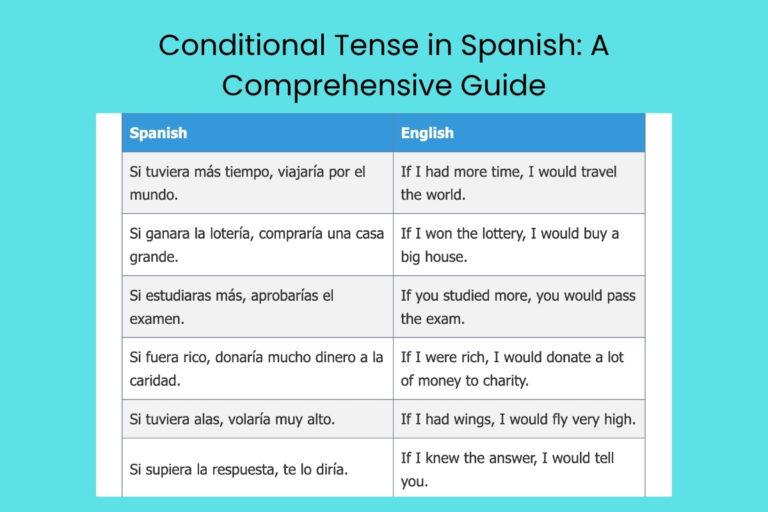
Conditional Tense (Condicional)
The conditional tense expresses what would happen under certain conditions. Like the future tense, decir has an irregular stem in the conditional tense.
Here’s the conjugation of decir in the conditional tense:
| Pronoun | Conjugation | Translation |
|---|---|---|
| Yo | diría | I would say/tell |
| Tú | dirías | You would say/tell |
| Él/Ella/Usted | diría | He/She/You (formal) would say/tell |
| Nosotros | diríamos | We would say/tell |
| Vosotros | diríais | You (plural, informal) would say/tell |
| Ellos/Ellas/Ustedes | dirían | They/You (plural, formal) would say/tell |
The stem changes to dir- in the conditional tense. The endings are the same as regular conditional tense endings.
Present Subjunctive (Presente de Subjuntivo)
The present subjunctive is used to express doubts, wishes, emotions, and possibilities. Decir has an irregular form in the present subjunctive.
Here’s the conjugation of decir in the present subjunctive:
| Pronoun | Conjugation | Translation |
|---|---|---|
| Yo | diga | I say/tell (subjunctive) |
| Tú | digas | You say/tell (subjunctive) |
| Él/Ella/Usted | diga | He/She/You (formal) say/tell (subjunctive) |
| Nosotros | digamos | We say/tell (subjunctive) |
| Vosotros | digáis | You (plural, informal) say/tell (subjunctive) |
| Ellos/Ellas/Ustedes | digan | They/You (plural, formal) say/tell (subjunctive) |
The stem changes to dig- in the present subjunctive. The endings follow the regular subjunctive patterns.
Imperfect Subjunctive (Imperfecto de Subjuntivo)
The imperfect subjunctive is used to express hypothetical or past subjunctive actions. It has two possible forms, both of which are derived from the preterite stem.
Here’s the conjugation of decir in the imperfect subjunctive (both forms):
| Pronoun | Conjugation (Form 1) | Conjugation (Form 2) | Translation |
|---|---|---|---|
| Yo | dijera | dijese | I said/told (subjunctive) |
| Tú | dijeras | dijeses | You said/told (subjunctive) |
| Él/Ella/Usted | dijera | dijese | He/She/You (formal) said/told (subjunctive) |
| Nosotros | dijéramos | dijésemos | We said/told (subjunctive) |
| Vosotros | dijerais | dijeseis | You (plural, informal) said/told (subjunctive) |
| Ellos/Ellas/Ustedes | dijeran | dijesen | They/You (plural, formal) said/told (subjunctive) |
Both forms are acceptable and interchangeable, although the first form (-ra) is more commonly used in modern Spanish.
Future Subjunctive (Futuro de Subjuntivo)
The future subjunctive is rarely used in modern Spanish, primarily appearing in legal or formal contexts. It expresses actions that will happen in the future, but within a subjunctive context.
Here’s the conjugation of decir in the future subjunctive:
| Pronoun | Conjugation | Translation |
|---|---|---|
| Yo | dijere | I should say/tell (subjunctive) |
| Tú | dijeres | You should say/tell (subjunctive) |
| Él/Ella/Usted | dijere | He/She/You (formal) should say/tell (subjunctive) |
| Nosotros | dijéremos | We should say/tell (subjunctive) |
| Vosotros | dijereis | You (plural, informal) should say/tell (subjunctive) |
| Ellos/Ellas/Ustedes | dijeren | They/You (plural, formal) should say/tell (subjunctive) |
Due to its infrequent use, it’s more important to recognize the future subjunctive than to actively use it in conversation.
Imperative Mood (Imperativo)
The imperative mood is used to give commands or instructions. Decir has irregular forms in the imperative mood.
Here’s the conjugation of decir in the imperative mood:
| Pronoun | Affirmative | Negative | Translation |
|---|---|---|---|
| Tú | di | no digas | Say/Tell (informal) |
| Usted | diga | no diga | Say/Tell (formal) |
| Nosotros | digamos | no digamos | Let’s say/tell |
| Vosotros | decid | no digáis | Say/Tell (plural, informal) |
| Ustedes | digan | no digan | Say/Tell (plural, formal) |
The tú affirmative form (di) is irregular. The other forms are derived from the present subjunctive.
Progressive Tenses (Tiempos Progresivos)
Progressive tenses describe actions in progress. They are formed using the auxiliary verb estar (to be) and the gerund of decir (diciendo).
Examples:
- Estoy diciendo la verdad. – I am telling the truth.
- Estábamos diciendo nuestras oraciones. – We were saying our prayers.
- Estarán diciendo mentiras. – They will be telling lies.
The gerund form (diciendo) remains constant across all progressive tenses; only the conjugation of estar changes.
Perfect Tenses (Tiempos Perfectos)
Perfect tenses describe actions that have been completed. They are formed using the auxiliary verb haber (to have) and the past participle of decir (dicho).
Examples:
- He dicho la verdad. – I have told the truth.
- Habíamos dicho que llegaríamos tarde. – We had said that we would arrive late.
- Habrán dicho todo lo que sabían. – They will have said everything they knew.
The past participle form (dicho) remains constant across all perfect tenses; only the conjugation of haber changes.
Examples of Decir in Sentences
Understanding how decir is used in context is crucial for mastering its usage. The following tables provide various examples of decir in different tenses and situations.
Present Tense Examples
| Sentence | Translation |
|---|---|
| Yo digo la verdad. | I tell the truth. |
| ¿Qué dices? | What are you saying? |
| Ella dice que está cansada. | She says that she is tired. |
| Nosotros decimos la verdad. | We tell the truth. |
| Vosotros decís tonterías. | You (plural, informal) say silly things. |
| Ellos dicen que van a llegar tarde. | They say that they are going to arrive late. |
| ¿Me dices tu nombre, por favor? | Can you tell me your name, please? |
| El profesor dice que tenemos mucha tarea. | The professor says that we have a lot of homework. |
| Siempre digo lo que pienso. | I always say what I think. |
| Mis amigos dicen que soy divertido. | My friends say that I am funny. |
| Mi madre dice que debo comer más verduras. | My mother says that I should eat more vegetables. |
| ¿Por qué dices eso? | Why do you say that? |
| Decimos que sí. | We say yes. |
| Dicen que va a llover mañana. | They say that it’s going to rain tomorrow. |
| Ella nunca dice la verdad. | She never tells the truth. |
| Yo no digo nada. | I’m not saying anything. |
| ¿Qué dice el periódico? | What does the newspaper say? |
| Siempre dices lo mismo. | You always say the same thing. |
| Decimos adiós. | We say goodbye. |
| Dicen que es un buen restaurante. | They say it’s a good restaurant. |
| Te digo la verdad. | I’m telling you the truth. |
| Le digo a mi hermano que me ayude. | I’m telling my brother to help me. |
| ¿Qué le dices a tu jefe? | What do you say to your boss? |
| Ella le dice a su novio que lo ama. | She tells her boyfriend that she loves him. |
| Siempre nos decimos la verdad. | We always tell each other the truth. |
| ¿Qué os decís vosotros? | What are you (plural, informal) saying to each other? |
| Ellos se dicen secretos. | They tell each other secrets. |
Preterite Tense Examples
| Sentence | Translation |
|---|---|
| Yo dije la verdad. | I said/told the truth. |
| ¿Qué dijiste? | What did you say/tell? |
| Ella dijo que estaba cansada. | She said/told that she was tired. |
| Nosotros dijimos la verdad. | We said/told the truth. |
| Vosotros dijisteis tonterías. | You (plural, informal) said/told silly things. |
| Ellos dijeron que iban a llegar tarde. | They said/told that they were going to arrive late. |
| Le dije que no podía ir. | I told him/her that I couldn’t go. |
| Dijimos todo lo que sabíamos. | We said everything we knew. |
| ¿Por qué dijiste eso? | Why did you say that? |
| El profesor dijo que no habría clase. | The professor said there would be no class. |
| Dije que sí. | I said yes. |
| Dijeron que era peligroso. | They said that it was dangerous. |
| Ella dijo que me amaba. | She said that she loved me. |
| ¿Qué le dijiste a tu madre? | What did you say to your mother? |
| Nosotros les dijimos la verdad. | We told them the truth. |
| ¿Qué os dijisteis vosotros? | What did you (plural, informal) say to each other? |
| Se dijeron secretos. | They told each other secrets. |
| Te lo dije. | I told you so. |
| Le dije que tuviera cuidado. | I told him/her to be careful. |
| Dijimos adiós. | We said goodbye. |
| Me dijiste que vendrías. | You told me you would come. |
| Nos dijo su nombre. | He/She told us their name. |
| Les dijimos que estábamos cansados. | We told them we were tired. |
| Os lo dije a vosotros. | I told you (plural, informal) so. |
| Les dijeron que se callaran. | They told them to be quiet. |
| Le dije a mi hermano que me prestara su coche. | I told my brother to lend me his car. |
Imperfect Tense Examples
| Sentence | Translation |
|---|---|
| Yo decía la verdad. | I used to say/tell the truth. |
| ¿Qué decías? | What were you saying/telling? |
| Ella decía que estaba cansada. | She used to say/tell that she was tired. |
| Nosotros decíamos la verdad. | We used to say/tell the truth. |
| Vosotros decíais tonterías. | You (plural, informal) used to say/tell silly things. |
| Ellos decían que iban a llegar tarde. | They used to say/tell that they were going to arrive late. |
| Siempre decía lo mismo. | I always used to say the same thing. |
| Me decía que todo iba a estar bien. | He/She used to tell me that everything was going to be alright. |
| ¿Qué decías antes? | What were you saying before? |
| Decíamos que sí. | We used to say yes. |
| Decían que era un buen lugar. | They used to say that it was a good place. |
| Ella nunca decía nada. | She never used to say anything. |
| Siempre me decías la verdad. | You always used to tell me the truth. |
| ¿Qué decía el profesor? | What was the professor saying? |
| Les decía que no se preocuparan. | I used to tell them not to worry. |
| Nosotros les decíamos la verdad. | We used to tell them the truth. |
| Te lo decía, pero no me escuchabas. | I was telling you, but you weren’t listening to me. |
| Le decía a mi hermano que me ayudara. | I was telling my brother to help me. |
| ¿Qué le decías a tu jefe? | What were you saying to your boss? |
| Ella le decía a su novio que lo extrañaba. | She was telling her boyfriend that she missed him. |
| Siempre nos decíamos secretos. | We always told each other secrets. |
| ¿Qué os decíais vosotros? | What were you (plural, informal) saying to each other? |
| Ellos se decían mentiras. | They were telling each other lies. |
Usage Rules for Decir
Decir can be used in various constructions, each with specific rules. Here are some key usage guidelines:
- Decir + que + Clause: This is the most common construction, used to report what someone says. For example, “Ella dice que está enferma” (She says that she is sick).
- Decir + a + Person: Used to indicate who is being told something. For example, “Le dije la verdad a mi madre” (I told the truth to my mother). The indirect object pronoun (le, les) is often used redundantly.
- Decir + Direct Object: The direct object is what is being said. For example, “Dijo una mentira” (He/She told a lie).
- Decir + Infinitive: Used to express an order or suggestion. For example, “Le dije que se callara” (I told him/her to be quiet).
Reflexive Use: Decirse can be used reflexively to mean “to say to oneself.” For example, “Me dije a mí mismo que podía hacerlo” (I said to myself that I could do it).
Idiomatic Expressions: Decir appears in many idiomatic expressions, such as “Es decir” (That is to say), “Por decir algo” (Just to say something), and “Como quien dice” (So to speak
Common Mistakes with Decir
Even advanced learners make mistakes with decir. Here are some common errors and how to avoid them:
- Incorrect Stem Changes: Forgetting the stem changes in the present tense (e to i) and preterite tense (dij-).
Yo
decola verdad. Yo digo la verdad. (I tell the truth.)Él
decíoque no. Él dijo que no. (He said no.) - Misusing Preterite vs. Imperfect: Using the preterite when the imperfect is more appropriate, or vice versa.
Cuando era niño,
dijela verdad siempre. Cuando era niño, decía la verdad siempre. (When I was a child, I always told the truth.) - Forgetting the Indirect Object Pronoun: When using decir to tell someone something, remember to include the indirect object pronoun (me, te, le, nos, os, les).
Dijea mi madre la verdad. Le dije a mi madre la verdad. (I told my mother the truth.) - Incorrect Use of Subjunctive: Not using the subjunctive in situations that require it, such as after expressions of doubt or emotion.
No creo que él
dicela verdad. No creo que él diga la verdad. (I don’t believe that he is telling the truth.)
Practice Exercises
Test your knowledge of decir conjugation with these practice exercises. Fill in the blanks with the correct form of decir in the tense indicated.
Advanced Topics
For advanced learners, consider exploring these more complex aspects of decir:
- Decir que sí/no: Understand the nuances of affirming or denying something.
- Decirle a uno que: Explore the subtleties of instructing or ordering someone.
- Idiomatic Expressions: Delve deeper into the many idiomatic expressions involving decir and their cultural contexts.
- Literary Uses: Analyze how authors use decir to create specific effects in their writing.
Frequently Asked Questions (FAQ)
Conclusion
Mastering the conjugation of decir is essential for fluency in Spanish. By understanding its irregularities and practicing its various forms, you can confidently use this versatile verb in a wide range of contexts. Remember to pay attention to stem changes, indirect object pronouns, and the appropriate use of tenses. With consistent practice, you’ll become proficient in using decir to express yourself effectively in Spanish.